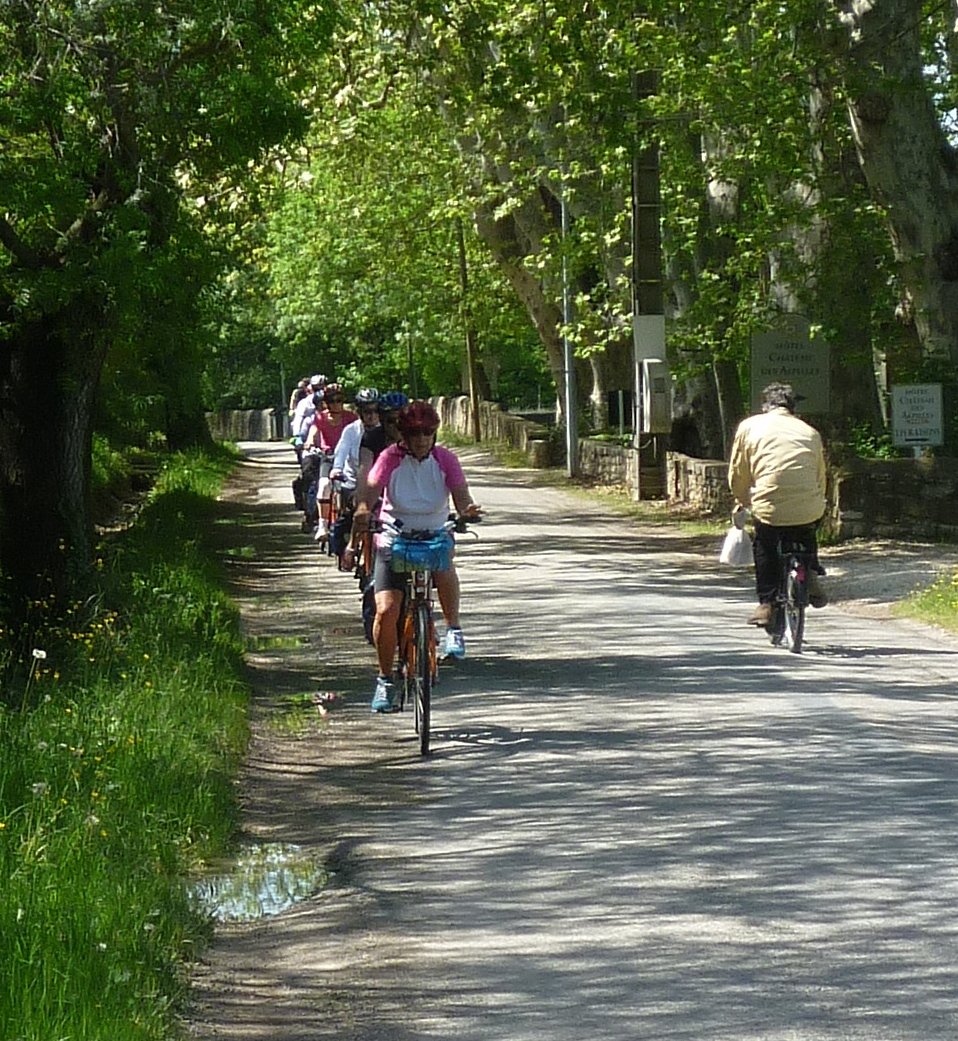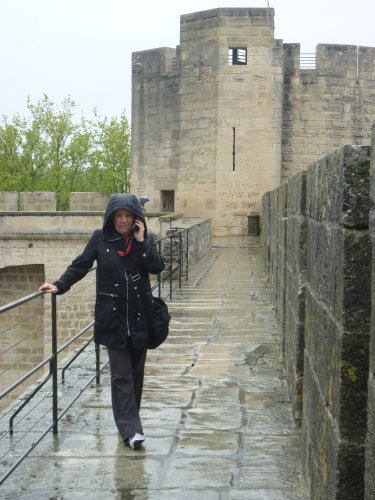
Travel the World without a Passport

In our previous post, we shared some of our experience staying overseas with Servas and Couchsurfing hosts.  This week, it’s our turn to host.

When Henry David Thoreau wrote that he had “traveled a good deal in Concord”, we don’t think he had his profile listed on Couchsurfing.org.  However, we’ve been able to experience some of the world’s wonder simply by offering hospitality and good cheer to wandering strangers.
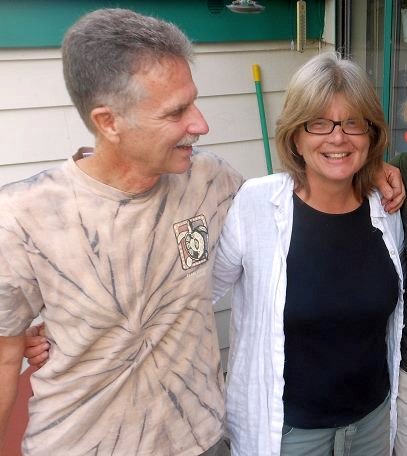
We started by hosting a Couchsurfer who we knew from years back

Playing it safe: we started by hosting a Couchsurfer who we knew from years back

We started hosting with a listing in the Servas directory, and more recently added a Couchsurfing profile to our visibility.  In both cases, we hosted before traveling with these networks, but this is not required.  In fact, there is no explicit tie-in between hosting and traveling – save for conscience.

We felt confident offering short-term accommodation to visitors with Servas, knowing that they had supplied references and been interviewed to get their official letter of introduction.  As we gained hosting experience and became comfortable with the concept, adding couchsurfers to our guest list was not much of a stretch.  In place of references and interviews, Couchsurfing profiles have verification, online reviews, and “vouching”.

Do Couchsurfing hosts need to offer a magnificant guest suite as our recent hosts in Provence did?  No, as the name implies, even a couch will do.  Servas listings in Europe often indicate that a sleeping sheet or bag is required.  Our own offering is a little rustic.  We try to make it up by being informed guides and scintillating conversationalists.  We ‘d rather our visitors remember our kindness and wit than the ridge down the middle of the fold-out bed.
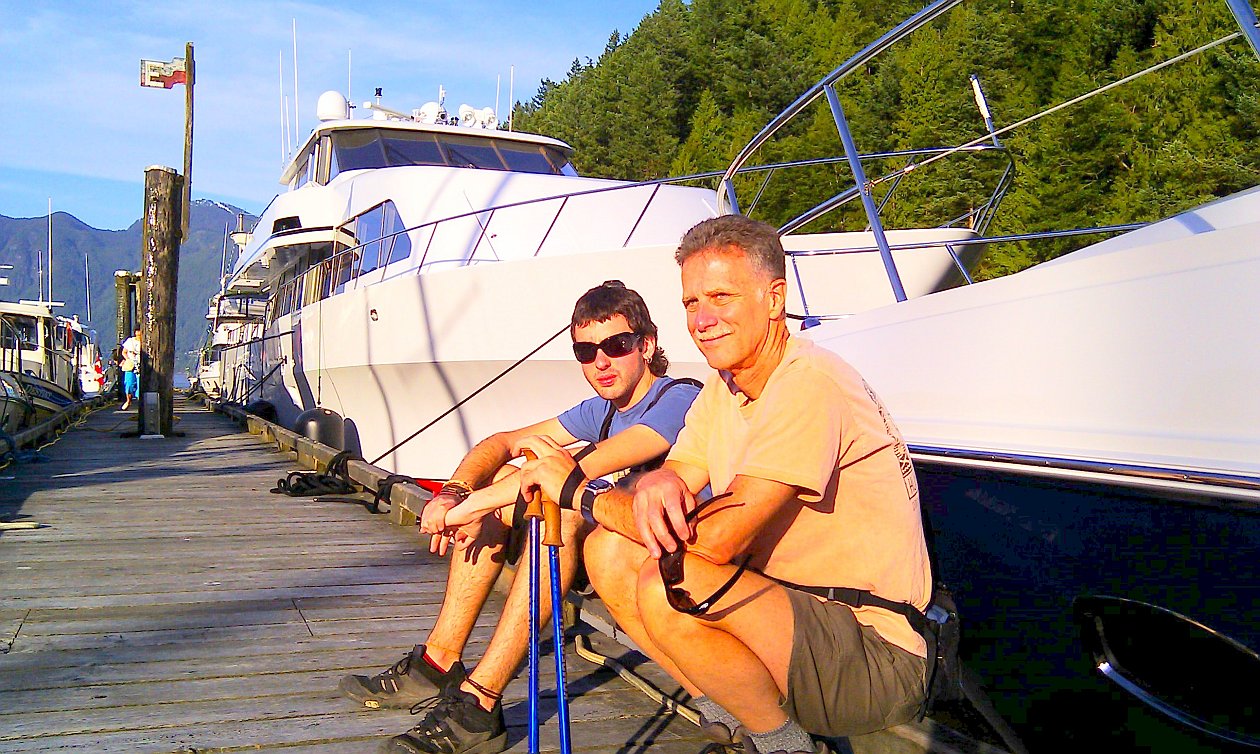
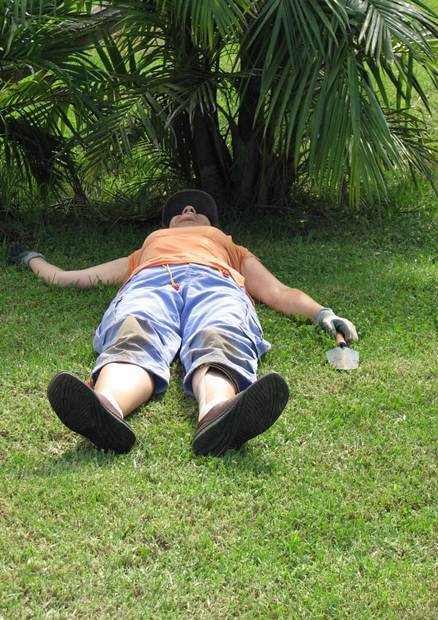
Relaxing after a local hike with a young visitor from Spain

Relaxing after a local hike with a young visitor from Spain

We’ve found the average age of travelers we’ve hosted to be younger than the hosts we’ve stayed with.  This is partly by design:  we often choose older hosts.  And youth is a time to “seek one’s fortune.”  For some of the oldest hosts we’ve met, their traveling days are behind them.  Hosting is a way to stay in the game, both by exposure to new people from new cultures, and by sharing past travel experiences with visitors.

We’ve enjoyed all of our hosting experiences over the years with Servas and Couchsurfing.  Each story is unique.  Our first visitor this year was Christoph, a young man from Germany completing his PhD thesis with a study of the North American distribution of an invasive weed species.  He had flown into Montana and was making a large circle tour that included our area.  He had chosen our home because we happen to live near a large infestation.  Who knew?  He explained that he had to pay for accommodation out of his limited research grant.  Christoph could only stay one night before driving several hundred miles to the next infestation, but we spent a great evening over a bottle of wine discussing everything from religious discrimination in Europe to crossing international borders with bags of weed seeds.
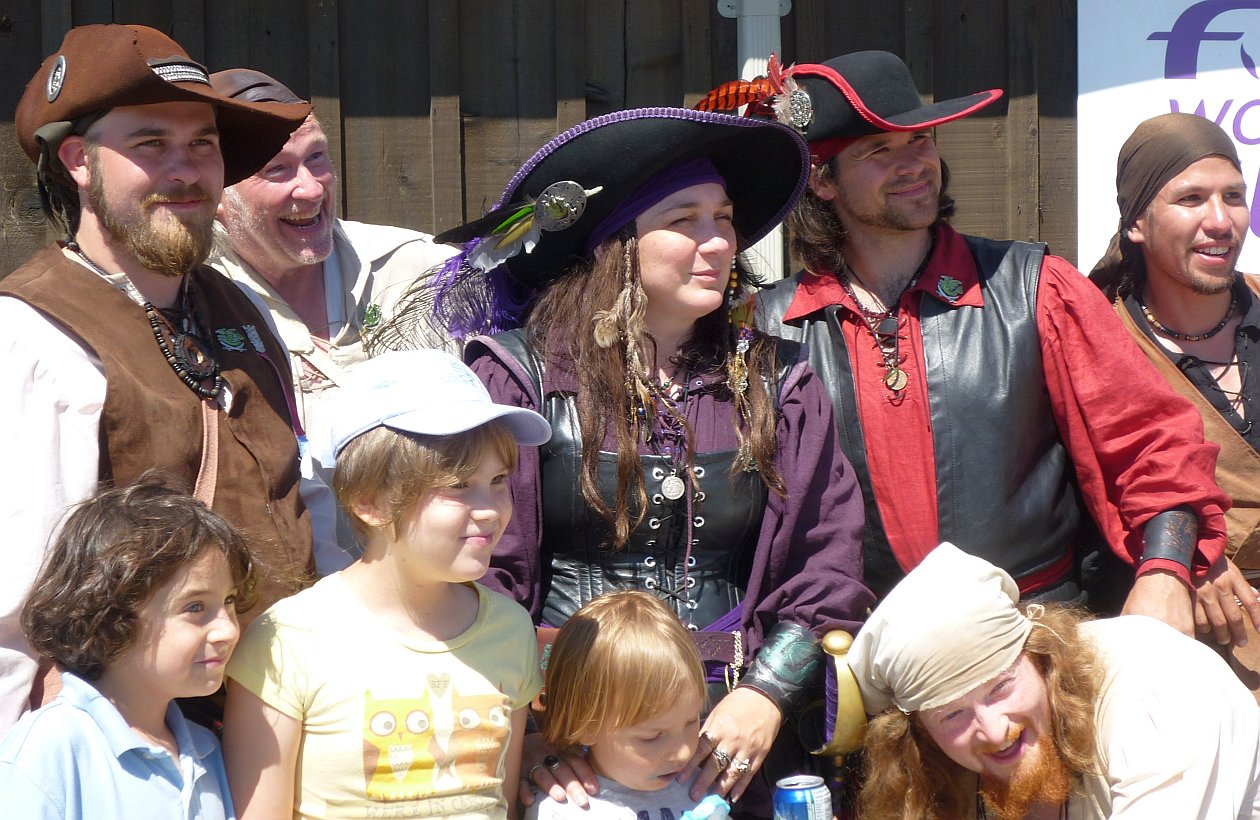
Local Renassiance Festival is a crowd-pleaser

Our local Renassiance Festival is a crowd-pleaser

Maud, a young woman from the French Alps, was traveling between long-term WWOOFing engagements on opposite sides of the country.  It was interesting to hear her first impressions of life on an organic farm in the New World.  In return, we showed her around the area, and offered her suggestions on where to stay when her mother came to join her.  Like most Servas and Couchsurfing visits, Maud’s stay was limited to a couple of days.  Servas has a policy of restricting stays to two days barring an unsolicited invitation by the host.  Couchsurfing has no official policy but recommends a similar time limit.

Have we had any troubling experiences?  Not really.  Once we had to exercise our “no” muscle.  A few years back, a young visitor from Prague broke several Servas rules when he asked, “Can I borrow the car?  Can you help me find a job here?  Can I stay longer?”  It is helpful to be able to

One of many local attractions

One of many local attractions

set clear limits without undue stress.  In our case, it wasn’t hard to say, “No, no, and no,” but others might find this challenging.  Our experience with this guest left us a little edgy, but with other positive experiences, we soon forgot this.  Until, months later, we received his unsolicited apology letter in the post.  Traveling is a learning experience for all of us.

Our most memorable hosting experience was non-standard.  Anaid, a young Mexican woman studying English on a student visa had been stranded here for several months by a travel snafu.  Her mother in Mexico had contacted Servas to make sure her daughter wasn’t left wandering the snowy streets.  Our local Servas coordinator contacted hosts with a special request for longer-term back-to-back stays to house the young woman until she could return to Mexico.  We chipped in about 10 days, and together with other hosts within a hundred mile radius, Anaid’s accommodation gap was covered.

As with traveling, hosting is about enjoying the unexpected.  Anaid’s letter of introduction – written no doubt by her mother – sported a grainy black and white photograph of a young woman with pigtails and a traditional school uniform.  However, when we first saw Anaid, she was wearing a backwards baseball cap and carrying a soccer ball – and her beaming smile revealed a tongue stud.  No doubt some of this would have been news to her mother … as would the news that Anaid had indeed spent at least one snowy night on the streets of the inner city.

A young student from Mexico at a local diner

Our young student from Mexico at a local theme diner

Anaid proved to be a delight.  She was helpful and easy-going.  She brought us some Mexican artwork, and our family still enjoys her easy recipe for enchiladas that she demonstrated for us one evening.  She was quite happy to accompany us on whatever we were up to, like spending an hour watching underwater coaching videos from Cheryl’s swim team.  Whenever we were tied up, she’d just pick up her soccer ball and head out, telling us she’d find someone “on the street” to play soccer with.  The first time we heard this, we were doubtful.  But she always found her game.  We suppose the young men in our town also fell under her spell.

A visitor such as Anaid lets us see our hometown in a new light.  Naturally, we took her to some of the local attractions we liked to visit.  We also discovered that her biggest unfilled dream was to see some of the filming locations for a popular TV series.  We looked them up and went on a tour.  Snapping pictures of familiar backdrops, she laughed, “I’m going to sell these for a million back in Mexico!”

Another visitor at the diner

Another visitor at the diner

As we’ve said, visitors are not expected to reciprocate with their hosts.  There is no requirement to offer anything other than a helping hand with the chores.  Couchsurfers can mark their profiles as “no couch available” or “currently traveling”, and even Servas hosts who are “receiving” are always free to decline individual requests without apology.

Still, most of our recent visitors have offered us accommodation back home and we’ve stayed in loose touch with many of them.  One offer in particular, we look forward to accepting before too long.  In a mid-size town in the Mexican mountains – “a place of eternal springtime” says she – a young woman named Anaid still lives with her very grateful mother.  We’ve promised to look them up when we’re in the neighbourhood.

Couchsurfing on a Feather Duvet

When we told our senior friends we were going Couchsurfing in Provence, many of them had never even heard of Couchsurfing.  Most of the rest expressed strong reservations about crashing on someone’s uncomfortable couch.  By the time we headed for the airport, we were confident we’d find more comfortable sleeping arrangements.

Couchsurfing.org is one of the more popular “hospitality exchanges”.  These sites and organizations offer travelers around the world short-stay accommodation with local hosts, with no expectation other than the pleasure of each other’s company…  and maybe some help with dinner.  The fundamental premise is that the cultural exchange is a two-way street, and the hosts should enjoy the experience as much as the travelers.

There are a number of hospitality exchanges, and some might be more suitable for the older traveler.  If you “surf” with a 20-something host, there’s a good chance you will be sleeping on a couch.  The average age of a Couchsurfer is 28, and only about 3% of users are over 50.  Still with about 5 million members, that’s 150,000 “golden age” surfers and hosts.

The view from our balcony in Provence

The view from our balcony in Provence

We decided to search hosts who were couples over 50, something fairly easy to do on the site.  We also restricted our searches to “verified” profiles with pictures, and read all the references carefully.  The listings generally indicated that their offer of accommodation was at least a private bedroom.  Still, to be on the safe side, we decided to try it out nearby before heading to France.  (We’d done the same thing with AirBnB.)  Our first Couchsurfing experience was in the seaside town of Sequim, Washington.  Our host, Teresa, was both interesting and gracious, and the accommodation offered us by our new friend was as good as any an old friend might provide.  After one more local test run, we were ready to try Europe.

Our chosen hosts in Avignon included facility with English on their profile, so we figured we could revert to our native tongue if our fractured French was found wanting.  In our message exchange before our arrival, we were careful always to include a Google Translate French translation of every message we sent.  It turned out to be unnecessary as our hosts were fluent in English.

Roussillon, the "Colorado of Provence", was one of the many local sites we visited with our hosts in Avignon

Roussillon, the “Colorado of Provence”, was one of the many local sites we visited with our hosts in Avignon

We were pleasantly surprised with the responses we got from our query.  Another host who couldn’t accommodate us went out of her way to recommend nearby B&Bs and restaurants:  “Tell them Pauline sent you.”  We received an unsolicited offer of accommodation from a retired judge who’d spent six months in our hometown years earlier.  By then we were already “booked” with the couple we’d selected.

Our hosts, Monique and Jean-Paul, had offered to meet us at the boat docks – later switched to the train station due to flooding on the Rhône.  We easily spotted each other, and much to our delight, they proceeded to drive us – with a few sightseeing stops en route – to a 400-year old Provençal six-bedroom farmhouse, hidden away on a quiet country lane, and surrounded by vinyards and fruit trees.  Our “couch” turned out to be a very comfortable bed in a second-story bedroom with ensuite, balcony overlooking the gardens, and kitchen facilities.  The kitchen was

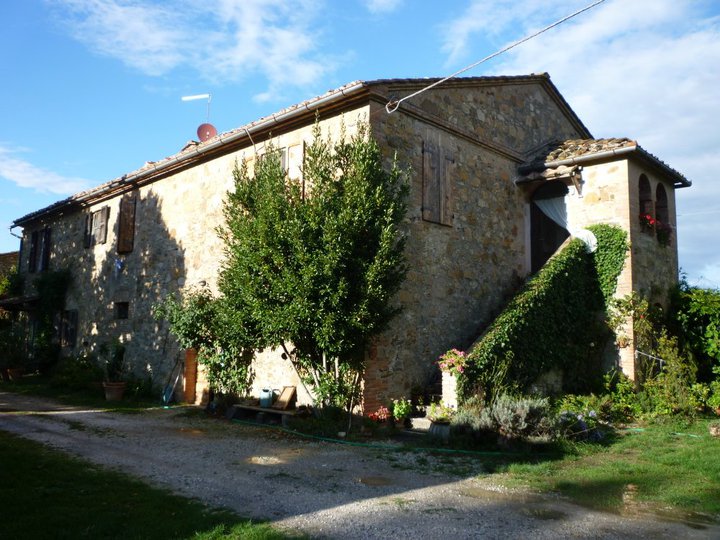
This farmhouse in Tuscany was a wonderful oasis

This farmhouse in Tuscany was a wonderful oasis

hardly needed as our hosts fed us delicious healthy home-cooked French cuisine three meals a day for our entire stay.  In addition, they drove us to many area attractions – including some we’d never heard of, and certainly would never have visited but for their hospitality.  What’s more, given their patience with our halting efforts, our French improved dramatically over just two days – although it never got anywhere near as good as their English.

Our visit to Avignon was a perfect example of the objectives of hospitality exchanges.  We talked about many subjects over our two days, comparing French ways of doing things to those back home – not to mention all the other countries that each of us had visited.  Like many Couchsurfers, our hosts were globetrotters, so we had the chance to live their adventures vicariously – as did they with ours..  And pick up some tips for the road.  It was the most memorable two days of our entire trip.  Couchsurfing will be high on our list for our next trip.  We’d recommend it for yours.

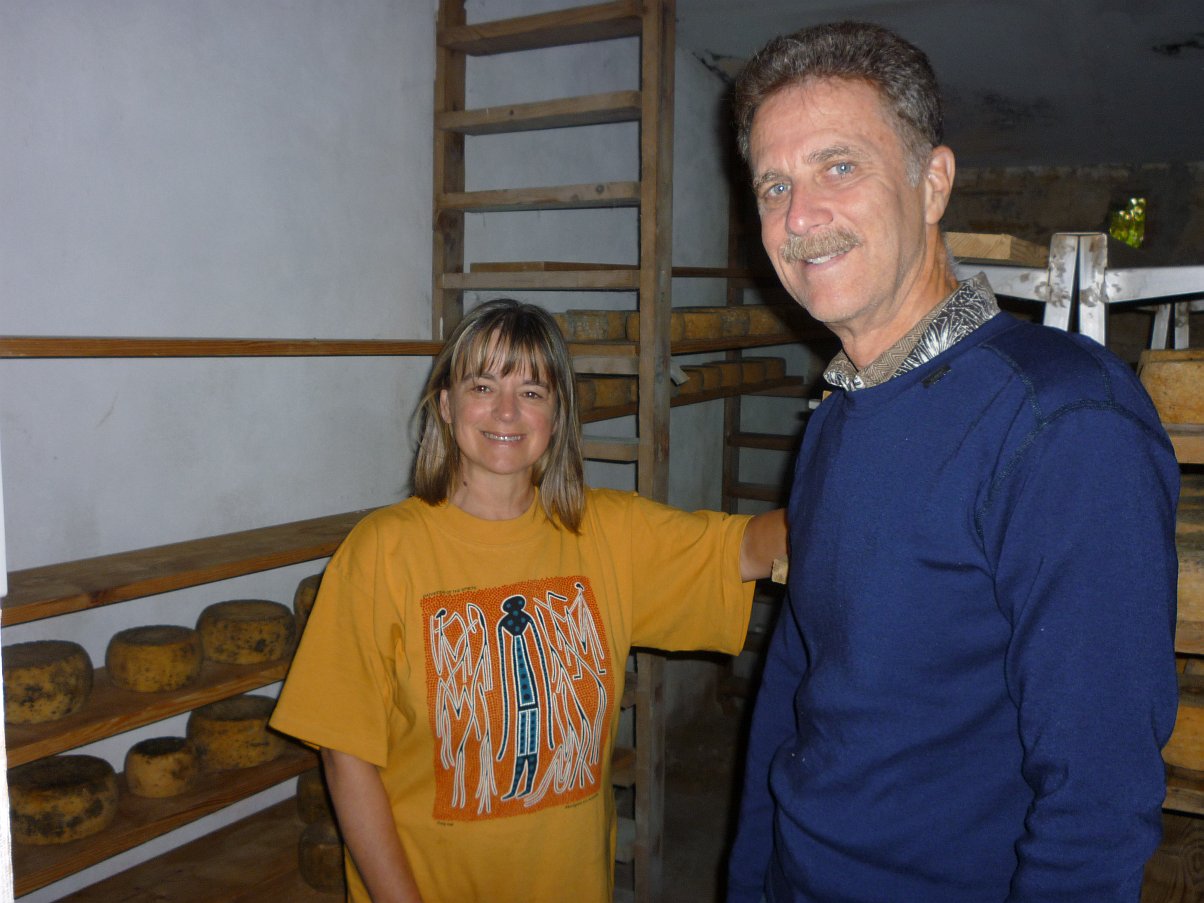
Maddalena shows Paul around the cheese operation

Maddalena shows Paul around the cheese operation

If you still feel uncomfortable and are looking for ways to start gradually, there are some alternatives you might try.  One is a much older hospitality exchange called Servas.

Servas has been around since just after World War II.  In many ways, it’s similar to Couchsurfing, but “older”.  Servas chapters operate independently in each country, and maintain paper lists of hosts.  Only gradually and tentatively are they experimenting with Internet directories.  Travelers must supply two letters of reference and be interviewed by a local Servas volunteer before receiving their official “letter of introduction” and the directory of hosts for their target countries.  In our experience, the average age of Servas hosts is older, perhaps even in the 50+ range.  The Servas accommodation we’ve seen has generally been at least a spare bedroom, if not more.

We were Servas members before we joined Couchsurfing, our second membership because the latter offered more convenient access via the Internet.  We still love Servas and have had great adventures with them as well, including a stay in a remote organic sheep-cheese farm in Tuscany, and a cozy family apartment on the Italian Riviera.  In both these stays, we had lots of

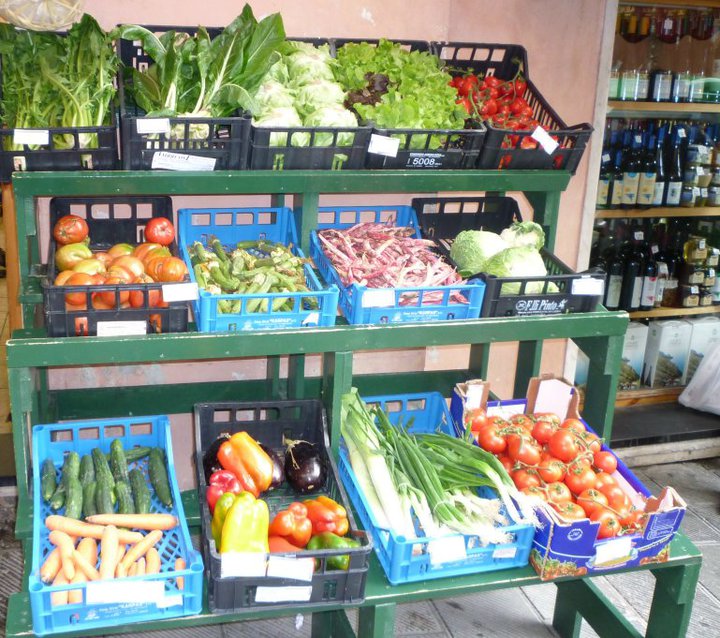
Barbara showed us the local shopping on the Riviera

Barbara showed us the local shopping on the Riviera

time for local sightseeing.  (One memorable experience at the last place was witnessing a typical argument between the mother and her teenaged daughter.  Out of deference to their guests, they switched from Italian to making points in English, leaving the father scratching his head … since he only spoke Italian and Genoese!)

Another way to ease in to the hospitality exchange concept is to arrange for a “day host” as it’s known in Servas.  (Couchsurfing has a similar concept.)  A day host meets a traveler during the day for a few hours to show them around, or engage in some joint activity.  For instance, while in Florence, we arranged to meet for capuccinos with a Servas day host who turned out to be a professional tour guide.  Surprisingly, we didn’t end up picking his brains for tips on the Uffizi Gallery, but instead learned of his excitement about the family’s impending trip to Colombia to adopt a young girl.

Cinque Terre was a day-trip from their place

Cinque Terre was a day-trip from their place

Is there an obligation to host in return for being hosted?  Not in Couchsurfing nor in Servas.  It’s more of a “karma” thing;  I’m sure there’s a special hell reserved for travelers who never host.  Perhaps it’s an endless stay in a characterless chain hotel.  But most travelers enjoy hosting as much as visiting.  After all, most of us can’t travel all the time, and hosting is inexpensive way to experience the world from the comfort of your own home.  In the year and a half we’ve belonged to Couchsurfing, and the longer time we’ve been Servas members, we’ve hosted more often than we’ve traveled.  And enjoyed every one.  We’ll share a few recent hosting adventures in a future post.

Maybe the next one will be you?

Adventures in Our Back Yard

“Hey, this isn’t so bad!”

It was our first hike in our second season with the local outdoor club, and we’d just made it up to the top of a pretty big hill.  A mountain, in my lexicon.  (Technically, it was our second hike of the year, but we didn’t think the popular New Year’s Day “hangover hike” counted.)  Coming back down proved to be our undoing.  We limped around the house for three days, helping each other up the stairs.  By the next weekend, however, we were ready to try a higher peak.

The 'higher peak', seen from the 3/4 point

The ‘higher peak’, seen from the 3/4 point

Joining a local outdoor club was another of the fortunate steps we’ve taken lately as we try to replace our dwindling old communities … with surprising benefits.  Cheryl and I had been casual hikers, casual cyclists, and infrequent paddlers for years.  Fair-weather adventurers.  Our last camping experience – when the boys were young – had us wrap up the soggy tent after three days of rain, and buy a last minute special to Mexico.  We thought of ourselves as reasonably fit … “for our age.”

We did like to get out for shorter hikes with a few friends.  Now the years were taking their toll on our circle – with injuries, operations, and just plain lethargy.  At times, we couldn’t find a single person to accompany us on a weekend hike.

With some trepidation, we found and joined a local Outdoor Association and booked ourselves on one of their upcoming outings.  We fully expected to be the “slowpoke seniors” in a group full of energetic youths.

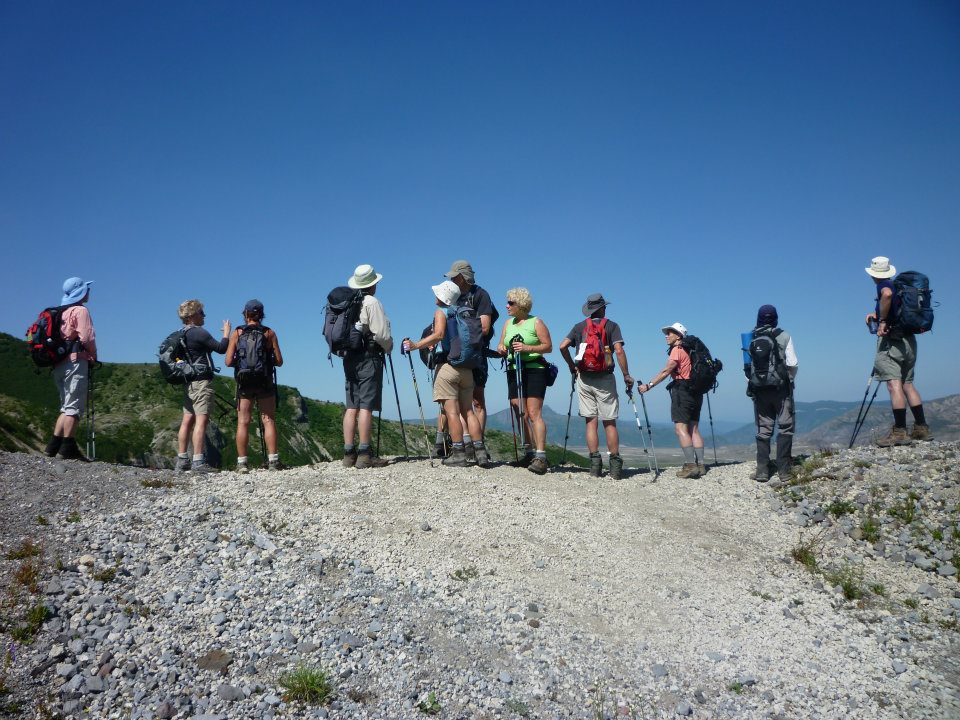
Hikers at Windy Ridge, overlooking the Mt. St. Helens crater

Hikers at Windy Ridge, overlooking the Mt. St. Helens crater

Much to our surprise, we found ourselves among the youngest on the trip – although it took us a few hikes to get past the “slowpoke” part.  As we’ve continued to do hikes and bike trips with members of the group, we’ve met close to 100 of the 250 members, and almost all of them are our age or older.

So many of these hikers and cyclists are inspirations!  It’s quite something to spend six or seven hours hiking up and down mountain terrain only to discover the septuagenarian we’ve been struggling to keep up with has two titanium hips or knees.  The senior hard on my heels has just done her 100th marathon.  Some members in our club, often retired for decades, have medical conditions that would keep most people chained to their easy chair – instead, they’re using a bit of chain to get past a few feet of scree on a mountainside.

A club cycle ride usually has 10 to 20 participants

A club cycle ride usually has 10 to 20 participants

So we’ve been inspired!  We’ve done a number of hikes we would never have done on our own.  We cycle 40 miles or more on a Saturday ride without giving it a second thought.  We’ve been camping again – so far just tailgate camping, with folding cots in the tent.

The surprise was how we fell into a new community of people in our stage of life, either retired or contemplating retirement.  Not a retirement of slowing down – instead, one of taking on new challenges and adventures.  Many we’ve met share our passion for “back roads” travel, and many of those have found creative ways to finance their lifestyle.

We’ve also been reintroduced to travel in our own part of the world.  In search of new horizons, volunteers in the club have put together multiday hiking or biking adventures in locations from the Mexican border to Alaska – plus the occasional one overseas.  Much as we’ll continue to visit other continents, we now foresee more travel close to home.

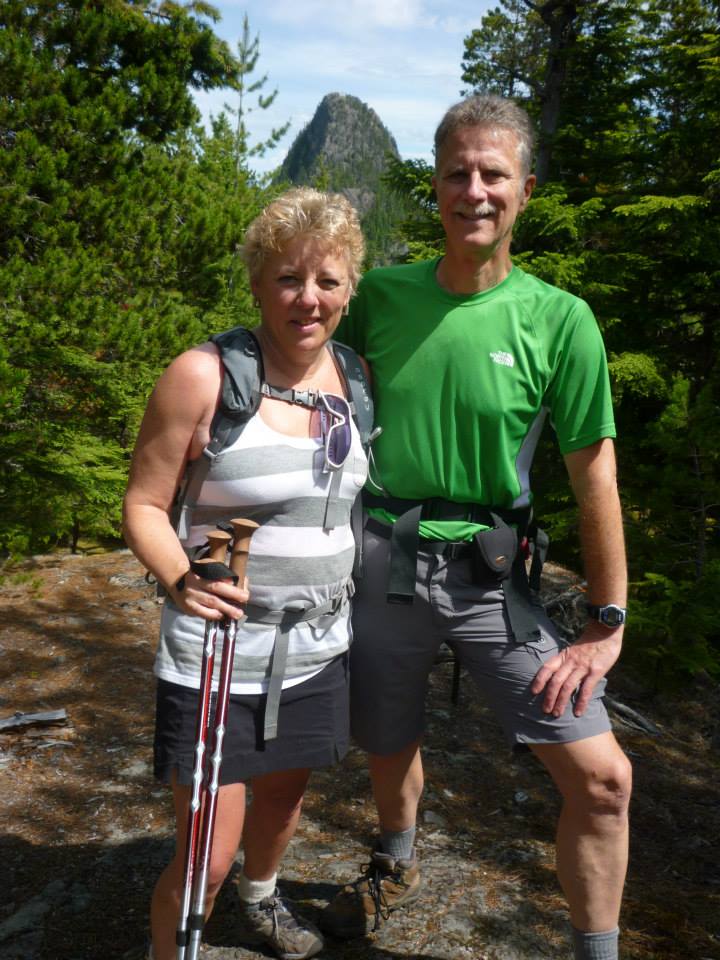
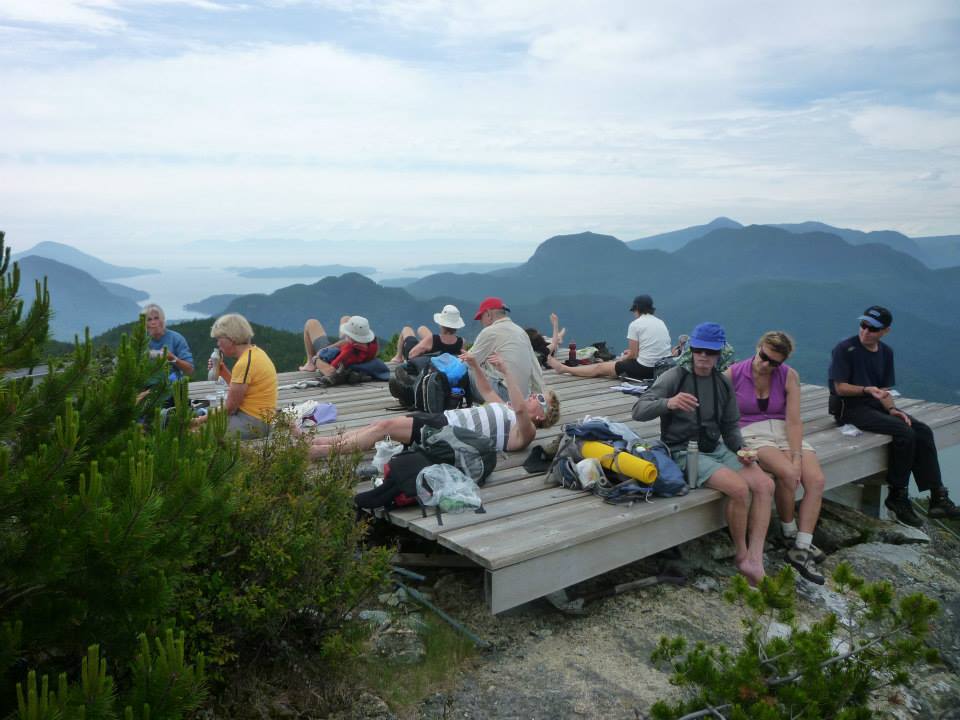
A happy wanderer, overlooking the North Cascades

A happy wanderer, overlooking the North Cascades

We’re also seeing that we won’t have to settle for being “slowpoke seniors” – we’ve got lots of counter-examples all around us, and we’re starting to catch up.  At this year’s “summer camp,” Paul read over “Younger Next Year,” and has started this program, using the burst of summer hiking as the “kedge” to jump-start his program.  Today, we head out to a four-day kayak camp.

For next year, we’re looking for a hike or cycle route that we’d feel confident leading.  That would be a first for us.  We’ve also found a some members who are interested in joining us on our next year’s European bike trip: a solution to the dilemma posed by our Provence trip earlier this year.

Exploring Mt. St. Helens beyond the Visitor Center

Exploring Mt. St. Helens beyond the Visitor Center

What can you do if you want to find a similar group to get you moving instead of slowing down with each passing year?  There are many options, but it may depend where you live.  We have no idea whether other outdoor clubs tend towards an older membership – ours didn’t advertise the fact.  The club is 40 years old and perhaps the membership has aged with it.  Still, retired people often have more time for such pursuits, and a stronger sense of “use it or lose it.”

We found our group by doing Internet searches for “hiking club” and the like.  It turns out there were quite a few in our City, including special interest groups like “dog-friendly hikers.”  We picked ours primarily based on the region it served.  We’ve since discovered that many members belong to more than one group, so finding one quickly leads to others.  Many states and provinces have umbrella associations for various outdoor groups, and often publish directories.

The view from the top always makes it worth the slog

The view from the top always makes it worth the slog

Another way to locate groups for outdoor activities is though Meetup.com (which we wrote about in our last post.)  In our experience, the Meetup groups tend to be looser, and some members are frustrated with a lackadaisical attitude towards event planning.  (Our own club is well organized, with a full executive, plus sub-committees for hiking, cycling, snowshoeing, and paddling.  Experienced members volunteer to plan and lead individual events, while newcomers learn the ropes.)

However you do it, joining an enthusiast group of active hikers or cyclists will get you out there when you just “don’t wanna.”  Try it out.  And see you on the mountain!

“Do not go gentle into that good night,
Old age should burn and rave at close of day;
Rage, rage against the dying of the light.”
Dylan Thomas (1914-1953)

Meeting Up

As described in our last post, Cheryl and I are looking at our options for finding or building a community to live in.  While working on that, we’ve made some progress in more limited community aspirations.  Here’s one of them.

Last year Cheryl and I decided to form a local Meetup.

Meetup.com claims to be “the world’s largest network of local groups.”  As the company advertises, “Meetup makes it easy for anyone to organize a local group or find one of the thousands already meeting up face-to-face.”  (Meetup’s mission is to “revitalize local community and help people around the world self-organize.”)

A beach bar at Las Terrenas in the Dominican Republic became our Meetup emblem

A beach bar at Las Terrenas in the Dominican Republic became our Meetup emblem

Paul had been attending Meetups related to his profession for several years.  Last year, we decided to investigate groups more in line with our hobbies, travel, and retirement plans  Since then we’ve joined about ten communities related to travel, travel writing, outdoor activities, photography, foreign languages, and small-business networking – in fact, so many that we have yet to actually meet with some of them.

There was one topic we had trouble finding, and that was the theme of creative retirement around which this blog is centered: “adventurous financial independence without waiting for a net worth of two million dollars.”  We didn’t have a lot of friends who wanted to investigate these kinds of ideas so we decided to form a local Meetup for just that purpose.

A year and a bit later, with very little direct publicity, our Meetup has over 100 on its mailing list, and – pretty much every month – some 15 to 20 of them get together in an informal venue for presentations and discussion.  We’ve covered topics such as Collaborative Housing, Financial Independence, Life Transitions, Making Travel Pay, Financing a Travel Lifestyle, Planning a Round-the-World Trip, and various other travel secrets.  In addition there have been social nights and photo nights with no set agenda.

Our AirBnB evening was at an official accommodation

Our AirBnB evening was at an official accommodation

Meetup.com has been a helpful platform for organizing, advertising, and managing these events.  By means of a suggested $5 donation at a member’s first meeting of the year, we have covered all expenses, including site fees, with a small contingency fund carried forward.

Along the way, we made several discoveries.  One thing we learned was that most of our peers were not familiar with Meetup.com.  Many of our new members had never joined a meetup prior to ours.  As such, they are sometimes hesitant in coming out to their first event.  We’ve found that pre-screening new member profiles and requiring pictures helps put people at ease.  (Before we started pre-screening, we did have one or two incidents involving inappropriate spam from new members.)

Another surprise was how far people were willing to drive to attend a meeting.  We’ve had participants from as far away as a 90-minute drive – and return the next time!  For Cheryl and me, a 90-minute drive usually leaves us scanning AirBnB for overnight accommodation.  There is clearly a real hunger for this kind of face-to-face connection.

Writer Darlene Foster introduced members to the joys of travel blogging

Writer Darlene Foster introduced members to the joys of travel blogging

The most pleasing discovery was how well people fit together.  Our Meetup members coming together around a common theme seem to feel relatively at home, and open up quickly.  Many of our meetings have the flavour of old friends coming together, even when half the participants are first-timers.  We’ve been able to schedule events with no agenda and expect that good conversation will develop.

Of course, it takes some effort on our part to make sure new people feel welcome, and are introduced to others when they arrive.  We also make sure that everyone has name tags – a helpful icebreaker.  A realistic program and agenda helps manage expectations.

Thankfully, we’ve had several members offer to host meetings.  Most of our events have taken place in private homes, or sometimes in apartment common rooms – although we have rented rooms for larger events.  As the number of members continues to increase, we expect to investigate other venues such as area restaurant meeting rooms.  We know of some that only have a $5 minimum per person for such uses.  For now, we can usually squeeze 18 or 20 into most of the living rooms in the area, even if some of us are on the floor.

Even more important, most of our presenters are “home grown”.  While we have brought in outside experts for some topics, many have been ably handled by members.  Often we’ll have two shorter presentations in one evening.  We’ve attracted an eclectic mix of people in various stages along the retirement path, and many of them have complementary skills or learning that they are willing and able to share.

One of our speakers described a tiring retirement project

One speaker described a tiring project

For our minimal troubles, we’ve met a collection of interesting people – and get together with some of them on a regular basis.  We’ve learned some very helpful information about traveling cheaply and making money on the Internet.  We’ve had a chance to reflect on some of the deeper issues of ageing and retirement.  We have a sense that we’ve helped others expand their retirement horizons.  All at very low cost, and with a good helping of fun.  In the future, we envision  joint travel opportunities, and maybe some long term friendships.

Starting a Meetup was definitely a good idea.  We’d definitely recommend joining one or two – or a dozen – and if you can’t find what you’re looking for, then why not start your own?

Meetup:  “using the Internet to get off the Internet.”

Let us know how it goes.

Why Live Alone

A few years back, we learned of a successful experiment in communal retirement living pursued by some old friends of ours in Australia.  They had joined with two other couples, and built a special home to their requirements.  While each couple has private sleeping quarters, they share most of the 3500 square-foot house.  They love it!

Collaborative retirement household featured in "A group solution to growing older", Sydney Morning Herald, June 3 2013

Collaborative retirement household featured in “A group solution to growing older”, Sydney Morning Herald, June 3

What first caught our attention was the possibility of saving money, retiring sooner, and traveling more.

However, the more we looked into it, the more we discovered that the real value of their arrangement was the new community that came with it:  something equivalent to a new family.

As we approach the next phase of our lives, we can feel our old communities slipping away.  Our kids are preparing to leave home – we think.  When we retire from our current jobs, we will quickly lose touch with former colleagues.  Our friends are beginning to retire and move away – some to the countryside, some overseas.  We ourselves plan to move out of the City, and expect to spend more of the year abroad.

We watched what had happened to our parents, aunts, and uncles.  Many of them ended up living alone for the final years of their lives.  Some of them were shepherded into assisted living complexes when living alone became too uncertain.  Even for those who managed to stay independent – often with the help of several nearby grown children – the solo years struck us as missing something.  Was there a better way?

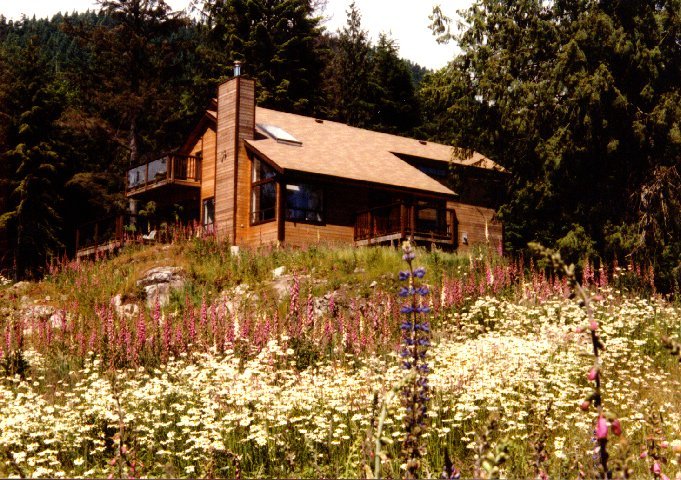
The tranquil view from our former island cabin - too much solitude now?

The tranquil view from our former island cabin – too much solitude now?

Cheryl and I have valued our privacy over the years.  We started our family in a development of five and ten-acre wooded lots.  We later enjoyed spending time with our boys at our off-grid island cabin.  Our retirement dream at one time included a 40-acre spread of wild countryside.

Now our perceptions are changing.  Selling the island cabin may have heralded this change;  we thought it would be too isolated as we got older.  Our experience with our own parents was pivotal:  we would probably live longer than they did, and – like most boomers – we have fewer children to rely on, children who are unlikely to live in the neighbourhood.  The same demographic shift likely means that the cost of assisted living will escalate while the quality of life in those complexes will decline.

Our reading has also underscored the importance of community.  The declining birthrate worldwide will make it harder to replace the old networks of support we are losing as we transition into the next phase of our lives.  Initiatives such as Blue Zones have shown how critical maintaining community is to our health and happiness as we age.  This aligns with advice on nurturing your communities in books such as Flourish and Younger Next Year.  We have all read by now how we can keep our brains younger by engaging in mental activity such as language skills and problem solving.  Living with other people is one way to ensure that kind of mental workout.

We recently joined an outdoor association, and were surprised to find so many retired or almost so.

We recently joined an outdoor association, and were surprised to find so many retired or almost so.

We’re now in the process of realigning our personal tradeoffs between privacy and community.  Can we construct a future for ourselves that replaces the communities we are losing?  We’re taking steps to reach out and join or create new communities for various activities.

What about collaborative living?  Is there a solution that will work for us?  Our friends in Australia had known their housemates for many years before moving in together.  When we took inventory of our own circles, we found very few possible candidates – when we broached the subject with some of those, they soon announced they were moving out of town.  Coincidence, we’re sure!

Can we find new partners for such a venture?  Perhaps.  It’s not a trivial exercise.  The householders and our friends call themselves The Shedders – primarily because of the physical and emotional baggage they had to “shed” in order to make living together work.  Will our circumstances dictate a different form of collaboration?  How far are we willing to go in trading our privacy for community?  We are grappling with now with these questions.  We’ll share some of what we learn over the months ahead.

Solitude or community - in the Marais district of Paris.

Solitude or community – in the Marais district of Paris.

Here are some of the sources that have influenced our journey.

  • Shedders:  This is Heather Bolstler’s personal blog about the journey to their collaborative retirement home.  The earlier entries are now available in this eminently readable Kindle eBook.  The Shedders are by no means the only ones to have made this work.  “My House Our House” profiles a group of three women who turned a preexisting house into a collaborative housing venture.  With an ageing population and lingering economic malaise, we predict a lot more of these in the coming decade.
  • A quiet home on a private acreage no longer the ideal?

    A quiet home on a private acreage no longer the ideal?

    Our own recent experience – such as our recent cycle trip in Provence – has underscored our own need for community.

One of our reasons for starting this blog is to reach out to a wider circle in our search for community.  We’d love to hear from you on this subject.

Travel Technology Light

This is Part 3 of a post on “Travel Technology for Late Adopters”.  Click here for Part 1 and Part 2.

We’ve been exploring the theme of indispensable mobile technology for travel.  Our objective is to restrict ourselves to the minimum amount of technology that really enhances our travel, without creating a lot of unnecessary noise & interruptions, or excessive costs in time or money.

In Manning Park, overlooking the North Cascades - cellphone tower free!

In Manning Park, overlooking the North Cascades, elevation just under 6000 ft – cellphone tower free!

Having just returned from several days camping and hiking in the mountains – out of cellphone range – we’re  acutely aware of how great it is to switch the cellphones off and put all those inboxes on hold.  From the perspective of “Who needs it?!” we continue our personal investigation of travel technology.

In our previous post, we outlined the technologies that we’ve come to regard as useful for us.  As we travel more, and work more on the road, we’re considering a few more acquisitions:

  • Cellphone with removable SIM card:  Until now, we’ve left our cellphones at home, not wanting to find them unusable, or pay huge roaming fees.  Our next phone will likely be unlocked, allowing us to buy a SIM card in the locality we are visiting.  While skype is cheap and handy, it’s still dependent on WiFi, and a cellphone would be better for emergency calls.  We’ll continue to carry it switched off!  And no data plans – we can wait for a WiFi hotspot.
  • Kindle eReader:  At present, we’re using Amazon’s free kindle reader app on the tablet.  I tried a Kobo earlier this year, but eventually decommissioned it since it kept crashing while trying to sell me books I “might like to read” instead of the one I was unable to.
  • Quick-dry poly underwear:  “Better living through chemistry” may reduce laundry on the road, but we’re having trouble getting past the price!
  • GPS:  With the exception of onboard GPS in rental cars, we’re not convinced a GPS device is worth it for travel.  However, they’re fun for keeping track of hikes, runs and bike rides – for us, maybe they’re better dealt with under the heading of sports devices.  Coming to rely on them can be dangerous in some situations:  this past week, we watched serious hikers declare that their GPS told them the lake was just around the corner, only to hike for another mile or more.  Thankfully, we had other ways to orient in the woods.  Finally, Paul is convinced that learning your way around a strange city is one of those mental exercises that keep the brain young – especially if you have to do it in a second language!
  • Speech-to-text: I’ve been considering this for years, but never gave it a workout.  Would using speech-to-text in the tablet make up for the lack of 80 wpm typing?  Maybe no more emails that read like this: “Dermaryy, pl easemeeet usat trmnla 1 at airrport sundxxxSaturday setpembr 13 – scrtch lost date – sb next friday.. thx  Palu
Can any ringtone beat the sound of a loon on a deserted lake?

Can any ringtone beat the sound of a loon on a quiet lake?  This solo fisherman doesn’t think so.

And, hey, does Paul need his own tablet?  Maybe he’ll learn how to make it sing before the next trip and avoid a repeat of the Arles meltdown.  On the other hand, we still enjoy the old style traveling – sitting around at the end of the day discussing travel adventures, instead of everyone checking their email back home.  Whatever we decide on can’t interfere with being present to the journey.

While we ponder, we look for inspiration in places like these:

  • Alone Together: why we expect more from technology and less from each other”
  • Lifeboat: friends at their best.

What is your indispensable travel technology?  Any recommendations for us?  We’d love to hear your thoughts.

Travel Technology for Late Adopters

In our last post, “Trip Technology Meltdown”, we left Paul cooling his fevered brow in the barge cabin, wondering how he might rescue his relationship with the wireless age … not to mention with Cheryl.

Châteauneuf-du-Pape, home of the world-famous Côtes du Rhône wine - and a pleasant bike ride from Avignon

Châteauneuf-du-Pape, home of world-famous Côtes du Rhône wine – and a pleasant cycle from Avignon

Evening drinks in an open-air bar in the old Roman Forum at Arles took care of the more important concern.  How to make wireless technology serve us without becoming slaves to its incessant demands is an ongoing exercise.  We hate it when interruptions from cyberspace keep us – or those we’re with – from being fully present to the joys and adventures of travel.  Every device we take with us adds to luggage weight – as well as increasing potential worry over loss or theft.  Traveling light and cheap has considerable advantages.

We’ve been using the Internet extensively to plan and research our travel for the past 15 years.  However, only recently have we counted on mobile devices on our travels.  In the past five years, we’ve rarely had a problem finding free WiFi during our time in Europe, Mexico and the Caribbean.  Payphones are another matter.

Here’s our current “Travel Technology for Late Adopters”.

  • Email: even before we had any mobile devices, we found it worthwhile to maintain a special email account for holiday travel only.  That way we can stay in touch with those we need to, and not be distracted by all the noise from our non-traveling lives.  With tiny mobile devices, we find this helps us spot what’s important.  We give out our travel email address sparingly – not even the spammers have it!
  • Tablet:  Cheryl bought herself at 10” ASUS Eee Pad Transformer Prime Android tablet about 18 months ago.  It’s adequate for on-the-road Internet research.  She also has a docking keyboard – in future, we may take it with us when we travel: the lack of a real keyboard was one of my meltdown triggers while in Arles.  As 80 wpm touch typists, we both have low tolerance for hunt-and-peck.  Before the tablet, we had an Apple iPod Touch, received as a gift.  While it was okay for occasional email, we quickly found the small screen to be too cumbersome for on-the-road researching.  (We’ll write about our essential travel apps and web sites in a future post.)

    Ruins of the Pope's "new castle" at Châteauneuf-du-Pape.

    Ruins of the Pope’s “new castle” at Châteauneuf-du-Pape.

  • Folding reading glasses:  I’ve had a pair like this for several years – one of the most useful pieces of technology I own for travel – makes the tablet or iPod or French menus usable!  Is this technology, you ask?  Yup, “the application of scientific knowledge for practical purposes.”  (Another piece of indispensable travel technology is a key-chain battery holder for hearing aid batteries!  I finally stopped running out of batteries on the road.  Of course, Paul’s modern hearing aids are lead-edge technology, worth more than the rest of this list put together.  Bluetooth-enabled, I think they anticipate what’s going to be said.  Real-time language translation can’t be far behind.  Even now, they make it possible to understand a wide variety of voices and accents.)
  • Skype:  we’ve had good success with skype on the tablet and the iPod, just using a basic microphone.  We’ve used more skype-to-phone time than the free skype-to-skype while on the road, so keeping some phone credits in the account with “auto-recharge” is important.  That way we can easily phone home, or even make cheap local calls when we have to.
  • Digital camera: while most tablets and cellphones have built in cameras these days, we still like the feel of a real focusing camera with F-stops, wide-angle lens, and good optical zoom.  We currently use a Panasonic Lumix DMC-ZS3 that’s a few years old.  Taking the tablet’s docking keyboard will also make it possible to upload photos directly from the camera’s SD card – something we currently struggle with.

In our next post, we’ll mention a few mobile technologies we’re considering to make longer travel easier, and perhaps less expensive.  As always, we’ll be asking ourselves the “appropriate technology” questions:

  • An Olivetan friar in Europe: "Sorry!  Didn't recognize Your ringtone!"

    An Olivetan friar in Europe: “Sorry! Didn’t recognize Your ringtone!”

    Is this new gadget really going to enhance the quality of our experience?  Take a deep breath and a “time out” – now, do we still think so?  Ah, come on, really!?

  • What’s the cost?  In up-front money?  Ongoing payments?  Disposal costs?  Security concerns and risk?  Baggage weight?  In time?  In unwanted distractions and information clutter?
  • Are the costs really worth it?  Once the novelty has worn off?  After next year’s model comes out?
  • Can we replace another device rather than just adding one more – and a bigger bag to carry them all in?

What is your indispensable travel technology?  How do you keep information overload at bay and manage the balance between instant access and over-accessibility?  We’d love to hear your thoughts.

Trip Technology Meltdown

“And they all moved away from me on the bench…”  Alice’s Restaurant it was not, but rather the dining room on a Rhône river barge.  Through the haze of my technology-induced rage, I sensed our cycling shipmates looking sideways at me.  Cheryl urged me down into the cabin.  As Betsy Talbot of MarriedWithLuggage.com has advised, when traveling as a couple, only one partner at a time can have a meltdown.  This one was mine.

For the past half hour, I’d been fighting Cheryl’s tablet computer, trying to navigate the website of the French national railway SCNF to find a train stop closer to some suburb of Avignon that I’d never heard of.  The technology was winning.  Apart from my not knowing how to approach the route question, the web site kept timing out, and my fingers were struggling with the touch-screen keypad.

Two of our cycling group ponder the Roman aqueduct at Pont du Gard.

Two of our cycling group ponder the Roman aqueduct at Pont du Gard, a short distance from Arles.

The sun was now warming our cycling days, but the rains of earlier in the week had now swollen the Rhône to the point where authorities had halted all passenger boats.  Our accommodation and transport were stuck in Arles – a wonderful place to be stuck, but stuck nonetheless.  A day and a half later, our most generous Couchsurfing hosts from the Avignon area had promised to meet us at the pier near the Phillipe-le-Bel tower.  Now we had to do something involving trains instead of ships, and I was determined not to make it their problem to plan our route change or to drive even farther to pick us up.  Hence my doomed attempt to find a train station closer to their home.  I felt I had to do it quickly, since our only communication channel was the Couchsurfing website, and time was running out

Cheryl in her current role as the non-meltdown partner suggested I settle for telling our hosts we’d be at the Avignon main station and leave it to them to suggest any alternative.  Obviously, she was right.  In the end, that’s just what happened.  They met us at the station entrance, and we enjoyed two wonderful days of French food and conversation – relaxing and sightseeing in Provence with two wonderful people.

The Roman amphitheater in Arles is now used for Provence-style "bloodless" bullfights.

The Roman amphitheater in Arles is now used for Provence-style “bloodless” bullfights.

The episode with the tablet started us thinking it was time to update our relationship to technology.  If we were to be traveling longer and more often, we would need this kind of last minute planning to be easier.  There are better uses for travel meltdowns.

Having written my first computer program in the late 60s – and still coaxing computers for a living – I should be versed in all the latest gadgets.  However, with Cheryl and me both in long computer careers, we’d made a conscious decision to govern the rate at which electronics entered our family life.  We never had cable TV and we still don’t.  For years, the family had a “screen-free” day every weekend.  We resisted cellphones until we could no longer find a payphone, and even now, we often carry them switched off.  We don’t value being contactable 7×24.  We spent many summer holidays with our boys at an off-grid island cottage, and I left “Search and Rescue” as my contact info for the office.  It worked for us!  You might call us Technology Late Adopters – and only when we think the technology in question enhances our quality of life.

Meanwhile, technology for travel was undergoing a transformation.  In the 70s, the only technology I needed was how to find the metal fiches for the payphones in Europe or South America.  When our family traveled in Costa Rica for half a year in 2000, spending an hour a week in a crowded and sluggish Internet cafe was about it.  Asking directions used to be one way to interact with residents with traveling, and maybe practice some Spanish.  On recent trips, however, people just started telling us to Google it. “No lo sé. Búscalo en Google.”

Our Couchsurfing hosts explained that the dancing was under not on the Pont d'Avignon.

The famous Pont d’Avignon.  Our Couchsurfing hosts explained that the dancing was under not on the bridge.

We’ve been using the Internet extensively to plan and research our travel for the past 15 years, but it looked like it was time to consciously accelerate our entry into the wireless age.  Marital harmony required it.

(In our second half of this post, “Travel Technology for Late Adopters”, we’ll talk about the wireless technology that works for us, while we continue the good fight against the growing tendency to be “over-available”.)

Why Travel Alone?

Part 2:

(In our previous post, a week of accumulated travel gotchas had left us pondering whether we had it in us to be the eponymous authors of a “No Pension Will Travel” blog.  Read Part 1 here.)

The rain didn’t let up for the next two or three days.  The tour’s biking was shortened the first day, and canceled on the second when the black downpour was lit up by lightning and drowned out by thunder rolling across the Camargue.  We squinted through fogged-up windows as the barge eased its way up the rising waters of the canal, and we listened to our guide extol the beauties of a seaside town we might never see.

Les Baux-de-Provence, Provence-Alpes-Cote d'Azur

Les Baux-de-Provence, Provence-Alpes-Cote d’Azur

By the third day, we’d developed some perspective.  I think the sun that broke through during the afternoon leg of our cycling made a shining contribution.  The biggest factor was that, for the past few days, we’d been part of a group of twenty-odd travelers – in the same boat, so to speak.  We’d had people we could talk to besides each other, some only in halting German or Italian, but many in English.  Our sense of isolation had evaporated like the puddles in the afternoon sun.

In my single twenties, I’d been content to travel solo in Brazil or Germany.  Likewise Cheryl with a girlfriend in Quebec or Maui.  In our thirties, we’d reveled in multi-week road trips around Australia.  In our forties, we’d loved our six-month family sabbatical on the back roads of Costa Rica with our two young boys.  Most of these trips had involved significant linguistic challenges, and we’d risen to them admirably.  We’d looked forward to more of the same in our retirement travel plans: learning one language after another, and hobnobbing with the “locals”.

However, while in Costa Rica, we had developed a sense that there was a certain isolation born of operating in a linguistic and cultural milieu in which we were only so-so competent.  We’d even ruled out the possibility of full-time overseas retirement in Latin America.  The potential isolation had swayed us.

We must have guessed our travel requirements were changing.  This was our second bike trip in Europe and we’d tried both times to enroll a few cycling friends to join us – without success.  In talking it over now, we realized how important our need for camaraderie had become.

We identified a few other travel discoveries.

We resolved to schedule “down days” while traveling.  On a three-week vacation, it’s tempting not to want to waste a single day “doing nothing”.  However, this kind of travel is demanding.  It’s much more work than working.  Trying to find one’s way around strange cities, attempting to be understood in one language after another, these tax the mind and the body.  A day off is both earned and needed.  It allows a different awareness – a time to integrate the deluge of new experiences – an opportunity for unexpected connections, like unexpected sunshine, to appear unbidden.  Why not ensure we spend these breaks in an environment conducive to rest and reflection?

En route to Saint-Rémy-de-Provence, Provence-Alpes-Cote d'Azur

En route to Saint-Rémy-de-Provence

We learned, again, that much as we still love each other after thirty great years of marriage, we are not and cannot be all things to each other.  Traveling as a solo couple through a non-English speaking country, we can put unrealistic expectations on each other to relieve the sense of isolation.  When this leads to the occasional meltdown, it helps not to take it personally.

It’s our desire to engage some travel companions that will be a driver for some of our investigations.  How can we travel more in small intimate groups, especially since recruiting from among our current circles has turned out harder than expected?  Are there better ways to get a group of us traveling together?  Do we need to find local clubs with a mandate for group travel?  Are there ways to travel in small groups and stay in touch with the people we meet afterward?  Can meeting new people this way also help our quest for new communities as we retire:  countering the diminishing connection with our children, leaving our current employment circles, moving away from our current neighbourhood?  We hope to answer these questions in the next couple of years.

We’d love to hear from you on this subject.

A couple of group travel options we’ve had some experience with:

  • G Adventures – the great adventures people:  we’ve done one trip with them, sailing the Greek Islands out of Santorini.  We will no doubt do more.  We have friends who’ve done several.
  • Bike Tours Direct – One-Stop Resource for Bike Tours Worldwide:  we’ve done two great European bike tours with them, and are already planning our third.  Good service, great selection!  Girolibero, the company running our Provence tour this year did an admirable job of mitigating the negative effects of some challenging weather conditions – hats off to them!

Two options we’ve not yet investigated:

  • Odyssey Treks – creating local friendships through adventure travel.
  • Probus Worldwide – activity clubs for active retirees. A group of 11 from a single Probus club was riding with us on the Provence bike tour.

Why Travel?

I looked at Cheryl in stunned silence.

They were just a few words, but they got my attention.  “I don’t even know why I want to travel, anyway.”

My mind went into overdrive.  Had I wasted $15 for the wrong domain for this blog?  Was it to be NoPensionNoTravel.com?  Would I have to travel alone?  Was our whole retirement plan in ruins before we’d even retired?

The trouble was: I knew exactly what she meant.

Aigues-Mortes

Aigues-Mortes, Languedoc-Roussillon

This trip was to have been an experiment – a taste of our carefree travel-more, spend-less lifestyle.  We were on the edge of the French Mediterranean in late April, ready to enjoy a weeklong bike-and-barge trip through sunny Provence.  We’d packed for the near-tropical weather the region enjoyed two weeks before.  Now it was seven degrees Celsius and a chill wind drove the rain through our light windbreakers.  My audio guide for the medieval wall tour had just shorted out from the water running through it.

In the six days since we’d left home, we’d been singled out for random customs inspections, had our overseas ticket canceled during our connector flight, and had the bag with all our biking gear disappear at our transfer point at Charles de Gaulle Airport.

Travel glitches notwithstanding, we’d made it to Barcelona prepared to make friends with the locals with our passable Castilian Spanish, only to find that the locals viewed Castilians a bit like imperial occupiers.  And we hadn’t learned a word of Catalan.

We’d looked forward to getting to know our live-in AirBnB hostess, only to learn on meeting her that she’d lost her job and been forced to move in with her boyfriend and rent out the rest of her apartment to other travelers.

Having heard endless warnings about swarms of pickpockets, we’d wandered around the City of Gaudí with safety pins on all our zippers.  The watchword was “situational awareness” – and at times, we’d felt like I Spy‘s Culp and Cosby, back to back with our guns pointed outwards.  Despite our precautions, we ended our five days stay with a lot less money than we’d planned – although I’m sure the pickpockets got none of it.

The pickpockets probably stay home when it rains.  “So should we,” I’d muttered as we dashed from the shelter of one overpriced Catalonian clothing store to another.

En route from Spain to France by bus and train, we’d paid a fortune for indifferent sandwiches at a gas-station pit-stop that could as well have been in Ohio, and almost missed our connection when the 501 irregular French verbs Cheryl had been studying for the past six months proved inadequate to the task of finding the right train to Aigues-Mortes.

Provence for Dummies

Are we two Dummies in Provence?

Aigues-Mortes.  Literally “dead waters”.  Dead in the water is how we felt as we searched our tablet for the least depressing weather forecast for our upcoming week of cycling.  The Provençal sun was missing in action.

A lot of things had gone missing.  Missing flights, missing baggage, missing hosts, missing toilets.  Even missing fiber from eating nothing but white bread.  No wonder public toilets are so hard to find in France!  No one needs them!

Most of all, we were missing someone to talk to besides each other.  To talk to in a language we felt at home in, that is.  A week of “Bonjour! Ça va? Il pleut beaucoup!” – or the Spanish equivalent – engenders a certain social isolation.  I think that was the crux of the matter.

So why do we want to travel anyway?  Are there things we need to do differently when we travel now?  Is much-anticipated travel really going to be a big part of our upcoming retirement?  These questions we pondered as we scoured the tourist shops for waterproof sweaters and gloves that hadn’t been displaced by high-priced French bikinis.

(To be continued…)