Travel the World without Leaving your Hometown

(Where Paul explains how we experienced our China and Colombia travel adventures without leaving home…)

In a couple of hours, I’ll be joining a group scavenger hunt on the nearby subway line.

I’ll be teamed up with Peter, a young immigrant father from Guangzhou in southern China, and together we’ll follow the English clues, hunt down items, and perhaps win the prize!

The afternoon event is a creation of our local immigrant services society, a non-profit organization that helps immigrants and refugees adjust more quickly to life in their newly adopted country.  The society offers classes in English as a Second Language (ESL), as well as practical information on “how things work here” for everything from applying for a driver’s license to networking for jobs and business opportunities.

Guangzhou street, about 1919.

Guangzhou street, about 1919.

My involvement started when I signed on as a “settlement mentor” a little over a year ago.  It seemed a great way to volunteer my services, and at the same time satisfy the travel bug during times we were unable to travel.  It’s done that and more.

Last year, I started my assignment with Wei, another young father from Guangzhou.  My commitment was to meet weekly with Wei, and come up with activities we could do together that would help Wei with his English, and learn something about his new hometown.  Over the course of the next six months, he joined us for a Labour Day barbecue, a traditional Thanksgiving dinner, and some family Christmas-season fun.  Of course, it wasn’t all one-way.  Wei and his friends invited us to a fabulous authentic Harvest Moon dim sum lunch at a fabulous restaurant, home-cooked several lavish Chinese meals for us, and even taught our boys how to cook a couple of spicy Sichuan specialities.

Wei must have valued the interaction, because he soon asked whether he could invite a friend to join us.  Over the next few weeks, the circle grew to include Mannie, Meng, Laureen, and Sonny.

Some of the family, and some of the mentees, posing with the Thanksgiving turkey & stuffing.

Some of the family, and some of the mentees, posing with the Thanksgiving turkey & stuffing.

Searching our city for opportunities to visit with the new immigrants took some doing, but it was a novel way to look at familiar territory in a new light.  We discovered interesting things together, including an elaborate traditional Halloween Haunted House that centered on the exploits of the famed 7th-century Chinese detective “Judge Dee.”  My new friends also marveled at an exhibit in the local city museum, featuring some of the stories and living conditions of Chinese immigrants from the 1800s.

We in turn learned a lot about China, some of it surprising.  One of our friends went back to China for New Year’s and came back divorced.  Apparently, a divorce in China is just a matter of signing the proper forms.  We also learned that many of these young people had very little sense of their ancestry.  During Mao’s “Cultural Revolution” of the 1960s and 1970s, a concerted attempt to erase ties with the past had extended even to destroying family pictures.  Some of our young Chinese had no idea what their grandparents had looked like.  One of those grandfathers had been a well-known stage actor;  the government had burned all of the silk costumes of his profession, so not even heirlooms remained.

A poster from the Cultural Revolution, featuring an image of Chairman Mao, and published by the government of the People's Republic of China.

A poster from the Cultural Revolution, featuring an image of Chairman Mao, and published by the government of the People’s Republic of China.

Even more surprising were some of the things we learned about life for these new immigrants here in our country.  All of them had come from professional or business backgrounds in their home country:  small and mid-sized business owners, accountants, wholesale sales reps, and the like.  Here in North America, their professional experience and credentials meant nothing.  What’s more, without a certain level of English skills, acquiring similar experience here would be very challenging.  All of my charges were highly desirous of improving their English;  they saw it as the key to whatever success they would ultimately achieve here.  They were highly appreciative of even the few hours we could spend conversing.

For a new immigrant, it can be very easy to settle into areas of town where others from your background are living.  The downside is that, for larger communities, it’s possible to live a reasonably normal life without forgoing your native tongue.  You can shop in stores run by your compatriots, work in an immigrant business, socialize with fellow new arrivals, and perhaps even attend churches or temples populated by fellow-speakers.  One of my adopted mentees was a single mom who had left China when her marriage broke down.  In her early years here, struggling to get by and raise her son, she had little time to devote to English.  Now her son, having learned English at school, was losing interest in speaking Mandarin to her.  I talked to her about how hard it must be to have lived here for several years, and yet still feel like an outsider and be unable to work in anything approaching her level of professional training.  What’s more, English-speakers often subconsciously assume that others with minimal English skills are less educated or even less intelligent.  As we spoke, I could see written in her face a deep sadness over how life hadn’t gone quite the way she had hoped when she left the comfort and safety of her birth land to seek opportunity for her son in the West.  She was seriously considering moving back to China.  It was at that moment that I really realized how much of a difference I could make in their lives by simply spending a few enjoyable hours together doing simple things.

A traditional Chinese cake, made with rice, almonds and rose water, was an offering at one of Wei's visits.

A traditional Chinese cake, made with rice, almonds and rose water, was an offering at one of Wei’s visits.

I’ve grown to admire the bravery of these new arrivals to our shores.  My new friend Peter actually placed his two teenage sons in local homestays for six months so that they could learn English faster.  They only saw each other weekends.  Having arrived here with her husband and knowing no one, the young divorcee has now set out on her own, and is taking every opportunity to practice her English.  The young single mother has chosen to stay, and has found new employment.  She and the divorcee have become friends.  Meanwhile, Wei and his newly arrived family decided to move away from the familiarity of their ethnic community so that they could live in a neighbourhood where they only hear English.

We stay in touch with some of last year’s troop, while this year I’m just getting to know Peter.  He’s asked if I’d like to visit the local Chinese Buddhist temple with him one day soon.  Sounds interesting.  And we have several invitations to visit families in China, make some new friends, and no doubt get a unique perspective on the country.

If this account has you interested in doing something similar, you may have to do a little research.  I don’t know what organizations might exist in your community.  Start by searching “immigrant services” on the Internet.  Here, we have a wide variety of non-profit groups that provide these services.  There are also initiatives within the local governments.  If that doesn’t produce results, try contacting some broad-based community groups such as the YMCA.

Dancers entertaining at the volunteer recognition night.

Dancers entertaining at the volunteer recognition night.

A more low-key way to start out might be to join a language group in your town.  Here we have a wide selection that can be found via Meetup.com – try searching ESL, or “English Conversation”.  If there is a prominent language group in your area, then try that, e.g.“Spanish” or “Mandarin”.  Mannie joined a local Mandarin Meetup, and now trades talk time with a local Anglophone who wants to learn Chinese.

Or just keep your ear to the ground.  In our part of town, Spanish is uncommon.  When I ran into a family of cyclists speaking Spanish, I struck up a conversation.  Next thing we knew, we were trading visits, hearing new Latin music, and trying out the favourite drink of Colombia.  Unfortunately, our friends from Bogotá were not able to transfer their professional skills, and when their daughter graduated from high school, they returned to Colombia.  By that time, the political climate there had improved, and things have since gone well for them.  They hope we’ll visit some day.  As do we!

Broken, … or Declaring a Breakdown?

A serendipitous prod from WordPress has Paul taking a new perspective on an old problem.

Forty years ago, perhaps when I was more impetuous or simply less experienced, I ran for major political office with a fringe party.  We had some good ideas the country needed to hear, but that’s not my focus today.

While speaking at all-candidates’ meetings, or responding to interviewers’ questions, I noticed something very troubling.  Now that I’d put myself forward as “the one with the answers,” I was reluctant to admit that I didn’t have them all.  In fact, I wasn’t even close.  Yet I soon began to speak and answer as if I did.  It was becoming less than OK not to know, not to have it all figured out.  (This realization has been an eye-opener through the years as I’ve watched our political process at work.  I don’t think I was unusual.)

Paul contemplates spilling the beans - or ...

Paul contemplates spilling the beans – or …

I began to notice a few weeks back that I was feeling the same way about this blog.  Having made our declaration about what we were up to, I entangled myself in a pretense that No Pension, Will Travel was unfolding exactly as it should.  In recent weeks, it became apparent that I was shying away from the parts of that declaration that weren’t working so well.  I felt “broken,” and I was resisting it.  This culminated in a case of writer’s block for today’s post.

For the first time, I turned to the WordPress “Daily Post” for inspiration.  There it was: “Breakdown!”  Backed into a corner of my own devising, I had no choice but to tackle this subject.  Having made the decision to proceed, my mind started to turn over once more.

Years ago, I learned of a new way to think about “breakdowns.”  Developed as part of “Conversations for Action” by a Chilean engineer named Fernando Flores, and popularized by Landmark Education, this new context treats a breakdown as something one can creatively declare as an opening to a revised commitment to new, effective actions towards a goal.  Declaring a breakdown becomes the prelude to a breakthrough.  So, instead of hiding my “brokenness,” I’ll declare a breakdown regarding part of our declaration.

While I could declare breakdowns in any of several objectives we’ve set for ourselves, the one I’m focusing on is this:  I have yet to make financially measurable progress towards “post-retirement career options – part-time consulting, telecommuting, and making money from travel.”  The plan that I’ve been working with is focused in the same general areas as this blog, but despite hard work and considerable effort, I’m no closer to a sustainable income stream or “business model” than I was when I wrote Draft 1 of the plan about a year ago.  I haven’t figured out how to be “useful” to the people in my prospective market.  The even bigger breakdown is that I’m broken up about it.  I’m letting it bother me to the point where it’s taken some of the

Not driving Cheryl crazy -- priceless!

Not driving Cheryl crazy — priceless!

fun out of the whole project.  That’s the habit I need to break.  It’s not sustainable!  And it’s driving Cheryl crazy!

So, now what?  I’ve declared the breakdown, and recommitted to the objectives.  Now all that remains is to look for new ways to deal with the issues I’ve identified, and discover new actions to take.  Perhaps I need to develop some tighter focus, eliminate some possibilities, clear away some of the time-wasters and other clutter in my life.  I’m looking at ways to increase my confidence, and push my willingness to take some uncalculated risks.  With a renewed focus on taking actions to deal with the breakdown I’ve declared, a post like this one in my inbox offers me some ideas to pursue.  Having admitted that the way I’ve been “broken” has been generating some marital discord, we’ve agreed to find some more productive ways to work on this “breakdown” together.

Cycling the beautiful Dalmatian Coast of Croatia

Cycling the beautiful Dalmatian Coast of Croatia

As I write these words, I see how past declarations of breakdowns – some made more consciously than others – have led to breakthroughs.  Our “travel crisis” while cycling Provence in the rain led to a decision to put together a group cycle trip the next time;  now we have 16 to 20 friends signed up for a biking trip in Croatia’s Dalmatian Islands next Fall.  Finding our friends feeling despondent about retirement prospects led to our starting a Meetup, which has brought new ideas and friends into our lives.  Running low on friends to hike with led to us joining an outdoor club – and now we hike and bike more than ever – and that’s where we’ve met most of our Croatian cycling travel mates.

Sometimes declaring a breakdown seems to have an almost magical power.

Not two months ago, we were unhappy with the unemployed status of one of our sons, a recent graduate still living at home.  After worrying in silence for some time, I chose to declare a breakdown.  Cheryl and I wrote down very specifically what we were saying wasn’t working, and what we wanted to see happen.  This led to a couple of deep conversations.  Next thing we

Working as a team again - but still atop a volcano!

Working as a team again – but still atop a volcano!

knew, our son had a full-time job, a part-time job, and an unpaid internship in his field.  As I said, … like magic!

Not every project goes like magic.  This income project may take some time.  I may find myself stuck again.  You can bet your car that, as I work on some of these new ideas I’m generating, I’ll once again reach a point where I don’t want to admit that there’s “No Pension and Not Enough Travel.”  If you happen to notice, would you remind me to declare another breakdown?

Postscript: while writing this post, I discovered that Flores’ work on Conversations for Action had been collected into a book:  “Conversations for Action, and collected essays.”  I’ll definitely check it out.  Once more, a breakdown has led me to something new.

Living inside a Bucket List

Paul was reviewing his bucket list recently – I wonder what he’ll be up for next? – and wanted to share some of his observations.

Film poster for The Bucket List – Copyright 2007, Warner Bros. (Photo credit: Wikipedia)

Film poster for The Bucket List – Copyright 2007, Warner Bros. (Photo credit: Wikipedia)

“Bucket list: a number of experiences or achievements that a person hopes to have or accomplish during their lifetime.”  From the phrase “kick the bucket”, slang for “die”.  The origin of this term is obscure, but I’m sure it was around before it was popularized by the 2007 film The Bucket List with Jack Nicholson and Morgan Freeman.

Despite the end-of-life reference, you don’t have to be at death’s door to benefit from a bucket list.  For this reason, some refer to the concept as a “Life List”.

I started mine three years ago, after some inner wisdom and a wise coach pointed me in that direction.  I’ve been reviewing it lately as Cheryl and I prioritize some upcoming travel goals.  Should we climb to Machu Picchu, explore the ruins of Pompeii and Herculaneum, go on a safari in the African savannah of Botswana, visit Lithuania and meet with someone bearing my old family name, or take tango lessons in Argentina?  Next, that is.

Creating a life list has had a big impact on my life, on too many levels to relate.  This blog is one result, both direct & indirect.  Others are more elemental.

Venice is the place to be if learning Italian's on your list

Venice is the place to be if learning Italian’s on your list

At the time I created the list, I wrote the following:

My list grew slowly at first.  I didn’t want to clutter my list with things I thought I should want to do, but didn’t yearn for.  No “nice ideas”;  no “everyone should want this.”  I was careful to make sure everything I added met the requirement:  was this honestly something I would regret not doing?  A final indicator was a certain feeling of “Yes!” when something passed the test:  it had been on my unspoken list all along.  After a couple of weeks, my list had six items on it.  Two weeks later, it had grown almost sevenfold.

Of course, using the list has led to some adventures.  I finally flew in a fixed-wing glider, after watching yearningly from below for over 50 years.  It was a great experience, and I’m keeping it on the list for at least one more ride over the mountains on thermals.  (Once Cheryl’s forgotten about that fatal glider accident last summer.)  Climbing the Mayan pyramid at Cobá led to an interesting episode, which I chronicled in another post.

Committed now and waiting for the tow plane

Committed now and waiting for the tow plane

My list also enabled me to take action on some health items I’d been putting off for years.  Losing over 40 pounds in 2010 gave me a great sense of achievement and inspired several friends to achieve their own weight-loss goals.  I’m sure it also contributed to my overall health as nothing else has.

Creating a bucket list also gave me much clearer insight about where I wanted my life to go in general.  Although it wasn’t foreordained, more than half of the item on my list ended up travel related.  The name of this blog is no accident!

But the outcome both memorable and unexpected is the quality of experience that a “bucket day” brings me.  On several days when I’ve ticked off an item, the ticking itself took only an hour or two, but the whole day was infused with a kind of magic.  Three years later, I remember vividly the sense I had walking to the bus stop to my appointment with Item Number One.  The whole sky was electric, the trees alive, my own steps a mix of excitement and trepidation.  In some ways, the event itself was anticlimactic.  While bungee-jumping is not on my bucket list – never say never – I can imagine that the split-second of commitment, the instant between starting to step forward and actually becoming airborne may be the moment one remembers best.

Item Number 5 - San Miniato al Monte, near Florence

Item Number 5 – San Miniato al Monte, near Florence

On a recent trip to Florence, Italy, I had a chance to tick off another item.  I had always wanted to visit the Basilica of San Miniato al Monte and ask for the keys to the church.  The reasons were somewhat obscure, and Cheryl would often rib me about my obsession.  Still, on a fine September day, we set out to make the ascent to the hilltop site overlooking Florence – Firenze in Italian.  As seemed befitting, I suggested we make the entire trip by foot, which had it take all day.  I remember that day like yesterday: walking along the banks of the River Arno on a Sunday morning while scores of fishermen relaxed on the grassy banks, encountering a colorful fund-raising run near the Piazzale Michelangelo, catching ever more breathtaking views of Firenze as we climbed the hill towards the Basilica.  The whole day was lit up, and remains my favourite day of our whole trip to Italy.  Even Cheryl thinks it was one of the best.

Once again, the moment of completion faded into relative obscurity.  Upon reaching the church, I located the first official I could find – the Olivetan friar who was manning the gift store – went up to him, showed him my ID, and asked in my best Italian, “Per favore, le chiavi?”  May I have the keys, please?  I earned nothing more than a bemused look from the friar, but what cared I?  My mission was complete!  Item Number Five:  Tick!

By that time, I had learned that ticking off the item on your bucket list isn’t the real juice.  It’s how life shifts the moment you add to the list, with the intention to make real, something you’ve only been dreaming about.

View over Florence from San Miniato al Monte

View over Florence from San Miniato al Monte

Ready to create your own bucket list?  Here are some resources to get you started:

  • One inspiring list-maker was John Goddard, who died this year at the age of 89.  Known as the “real Indiana Jones”, at age 15, he created a list of 127 far-reaching goals, and spent the rest of his life achieving a great many of them.
  • The end of another day of magic

    The end of another day of magic

    There are now several sites devote to publishing and sharing your life list – please let us know what you think if you try any of them:

And some contrary positions that may help you avoid some of the pitfalls.  I think it’s all in how you hold your list:


Ageing Heads in the Sand?

Cheryl and I attended a workshop last weekend called Ageing Well in Community, sponsored by a seniors’ cohousing initiative.  I think it was the “Community” part that attracted our attention, not the “Ageing”.  After all, we’re still young, right?  Our average age is still under sixty, just.  (In fairness to Cheryl, I’m contributing more than my fair share to that average!)

Biking the hills at Les Baux-de-Provence, France

Biking the hills at Les Baux-de-Provence, France

We joined the outdoor club and are hiking and biking more than ever.  I’ve taken up an exercise program called “Younger Next Year”, and I’m feeling good about it.  I’m  in better shape than I was a year ago, and back near my college weight.  Cheryl’s taken up sprint triathlons.  In our coming decade or two, we look ahead not to ageing, but to more travel.  We’ve signed up with Couchsurfing, and booked a biking trip in the Dalmatian Islands, so we’re definitely young at heart.  We both still work at demanding careers, and are working towards our next one.

We were a little surprised by the image on the front of the course workbook:  a man with his head in the sand.  Surely that wouldn’t be us?

We were pretty smug about others who had their heads in the sand about ageing.  We had dealt with relatives of our parents’ generation who had refused to make plans for independent living until circumstances forced them into assisted-living complexes.  By refusing to accept the fact of their ageing, they had lost their independence when it was no longer possible to do much about it.

We also looked around at our own peers who were talking about retirement and still not saving anywhere near enough to finance it.  We were often shocked at the statistics of baby boomers heading into retirement with significant debts and mortgages, and an expectation that their current salary would continue for decades past traditional retirement age.  They definitely were behaving like ostriches.

What, me worry?

What, me worry?

However, as we worked through the first day of the workshop, we began to shift our perspective.  We are getting older, and those “ageing things” are getting closer.  We’ve lost friends to cancer, and more in our circles are widows and widowers.  We notice that some aren’t as sharp as they once were and wonder if it’s the beginnings of Alzheimer’s.  Friends and relatives younger than us have artificial hips or knees.  Our hiking and biking companions are sidelined more often, sometimes indefinitely.  We’ve become good friends with our physiotherapists.  At present, I’m dealing with shoulder problems.  While I’m still hoping to resolve them, I may not.  For now, I’m having trouble reaching things from top shelves. Wow!  I’m one of those “old people” with “reduced mobility”.  Fast forward fifteen years, and it’s highly unlikely we’ll have quite the energy and stamina we have now.  We might not want the same demanding workload we currently carry.

Like a growing number of people, we also realize that the world’s rapidly ageing population is going to put serious strains on traditional models of healthcare.  No matter how we organize society, when the population is ageing, and the ratio of younger workers to retired people is dropping, the cost of that care is going to rise.  Except for those who are independently wealthy, we are all going to feel the squeeze.

If we put these thoughts aside and wait until necessity intrudes, we may find it’s too late to take the necessary actions to maintain our independence.  Like others we’ve regarded ruefully, we may wake up one day and realized we’ve missed the opportunity to create our community of support.

Our friends still like to play

Our friends still like to play

As we discussed in an earlier post, we’ve been investigating the role of community – including some sort of shared or collaborative housing – in staying young and providing mutual support.  So far, it’s been a Good Idea.  Good enough to get us to the workshop last weekend.

While the workshop exposed us to a lot of creative ideas for building community and constructing collaborative living arrangements, it also made us realize that these things take time.  If we wait until we need community support in order to remain independent or manage our health care, it will be too late to build it.  Developing a collaborative home or a cohousing development can take years:  we know of few who’ve done it in three or four, and many who’ve taken seven or more.  Even if all we do is move to a new community, it will take time to become integrated and establish new networks and friendships.  The time to start is now.

Coming out of the weekend, we have a new sense of purpose in building our future community, … plus a lot more creative ways in which we can get started.  As interesting as we find the traditional cohousing concept, we’re not sure it’s the model for us.  But there are plenty more to choose from.  It’s a good thing.  As boomers age,  more and more of us will realize it’s going to take some creative community building to meet the challenges of the coming years.  No one solution is going to be able to match the magnitude of the requirement.

In less than two decades, I'll have one of these!

In less than two decades, I’ll have one of these!

As I was writing this post, I was chatting with Cheryl’s mom, who is visiting us from her home in an assisted-living complex.  She was telling me about how she was too young to take up some of those exercise activities that the staff put on.  Maybe next year, she said.

For my part, I have acquired a new sense of urgency, not a panicked urgency, but a realization that the biological clock is ticking.  Having taken my head from the sand, it will not be so easy to bury it again.  We need to pick a direction and start taking concrete actions to make ageing well in community our reality.  It’s time.

Need more?  Check these out:

What’s your take?

Back from Costa Rica, into the “Real World”

In the previous two posts, we talked a little about why and how we came to spend half a year in Costa Rica with our two boys, aged nine and 12, and touched on the irreplaceable education we all four acquired from this experience.  Here Paul talks about the aftermath.

All good things must end.

We ran out of money in Costa Rica perhaps ten days earlier than we’d planned, and so booked our travel back home around the time of the first few showers of the impending rainy season.  Including our air fare, as well as various tours and admissions, our average cost of living for the entire six months was about half of what it would have been had we stayed home.  Since we’d canceled our lease and put everything in storage, we had few other expenses during that time.  However, there was other financial fallout.

We spent one morning "helping" make caramelized sugar the old-fashioned way

We spent one morning “helping” make caramelized sugar the old-fashioned way

We quickly rented a new home, but before we’d even had the storage containers delivered, we learned that our company had suffered a major crisis in recent days.  My partners had taken the unprecedented step of laying almost everyone off – including themselves, Cheryl and me.  So there we were with a new lease and no jobs.  I won’t say it was easy to recover, but things did work out.  Cheryl, who had been the work-at-home Mom, eventually found a full-time job outside, and she still works there ten years later.  I picked up the slack at my former company by sub-contracting there part time, allowing me to take on more of the at-home parenting role for the next few years.  The company never fully recovered and we wound it down a few years later.

We had originally thought we might buy a house again, but the experience of being mortgage-free – together with our employment uncertainty – had us defer the purchase.  By the time our finances looked better, the real estate market looked overpriced and we stayed out.  We still rent – not a bad thing, as it turned out.

Packing up after our whitewater rafting adventure

Packing up after our whitewater rafting adventure

Despite all this, Cheryl and I never wavered.  This was one of the best things we ever did for our kids.

Still, I thought I’d best verify this again, and so I asked our two boys, now in their 20s, how they would sum up their experience.  (They had not yet read the earlier blog posts.)

Al, the younger, said emphatically that it was the best thing we’d ever done as a family.  It wasn’t just all those exciting adventures, including all those new animals he “never knew even existed.”  Most important, he said, was just that “time out of time”, when he and the rest of us could escape from the relentless schedule of everyday life, and for a few months, follow our spirits and our curiosity.

Dennis, who was still 11 when we were planning the trip, even wrote me something:

New friends visiting at our Costa Rican country house

New friends visiting at our Costa Rican country house

I remember vividly the day my parents told us we would be moving to Costa Rica for six months.  We were walking through our favourite city park when they dropped the bombshell on us.  I remember being pretty upset at first, especially when they said I couldn’t bring my Game Boy.  Fast forward 13 years later, and I can safely say I have absolutely no regrets regarding the trip.  I got to be surrounded by warm weather, awesome animals, cheap delicious food, and learn the Spanish language.  We lived on a farm, in an apartment, in the house of a Costa Rican family, in hotels, motels, inns on the mountain, bungalows by the beach, you name it.  I have dozens of interesting stories to tell from that six-month period, and it was definitely an experience I hope to repeat someday with my own kids.

Whew!  (I hope he still says that after he sees the picture in Part 2.)

Yes, it was worth it.  If you are reading this, and considering creating your own family adventure, and holding back … just go for it.

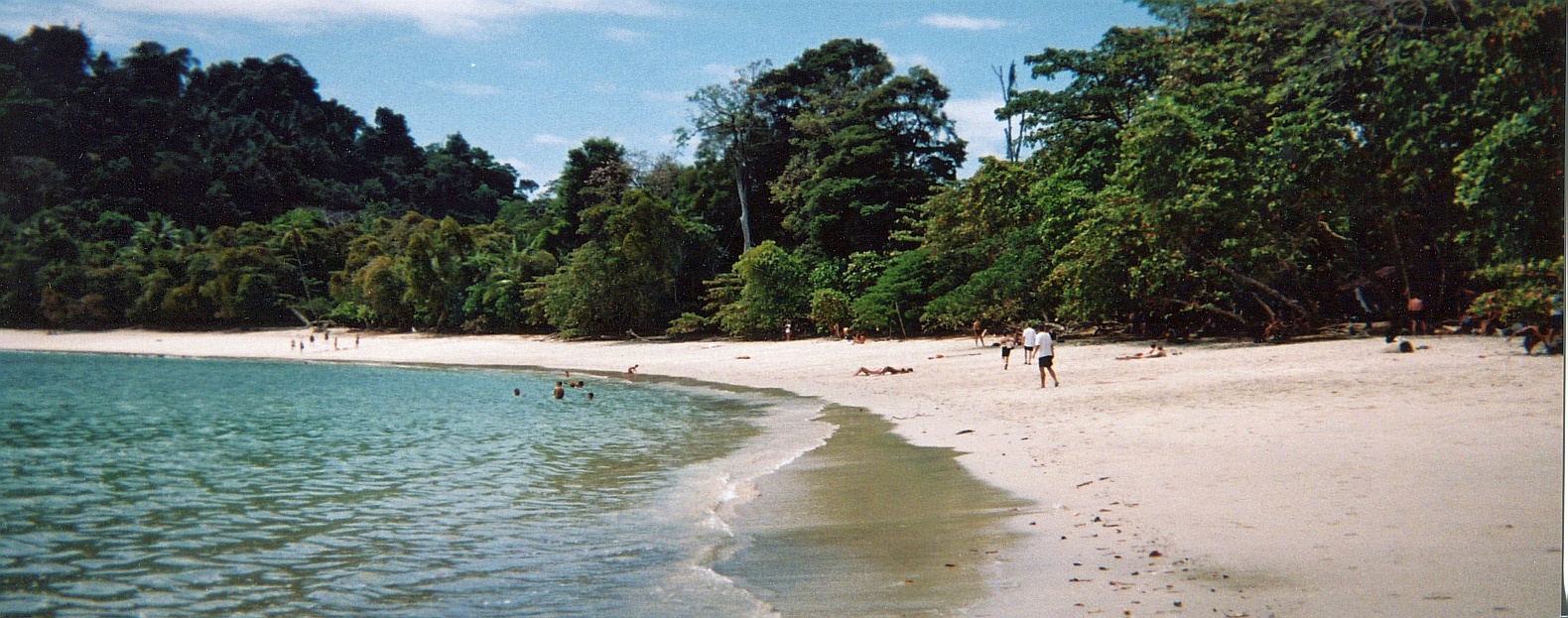
The beach at Manuel Antonio Park is busier than most we saw - and that means spunky monkeys!

The beach at Manuel Antonio Park is busier than most we saw – and that means spunky monkeys!

After I’d returned from Costa Rica, with the failing fortunes of our business partnership, I found myself years later confiding in one of my favourite career counselors.  I had the impression that my peers in the high tech industry looked askance at me because I had other interests – because I was willing to put my job on hold for half a year to go traveling with my family.  She told me that, in her experience, many parents work their whole lives, hoping “one day” to be able to do what Cheryl and I had done … and many never do.  It was good hear her acknowledgment.  Since that time, even some of my peers have admitted to taking inspiration from what our family did.  Some have admitted to envy.  Some have even compared me to the

A cemetery in San José, Costa Rica

A cemetery in San José, Costa Rica

fabled Mexican fisherman in this story.

I was reminded again of my priorities and Cheryl’s when I read “The Top Five Regrets of the Dying”, a short review of a book by the same name.  The author, a palliative nurse who worked with the terminally ill, had made a short list of the things she heard most frequently from those who were running out of time:

  • I wish I’d had the courage to live a life true to myself, not the life others expected of me.
  • I wish I hadn’t worked so hard.
  • I wish I’d had the courage to express my feelings.
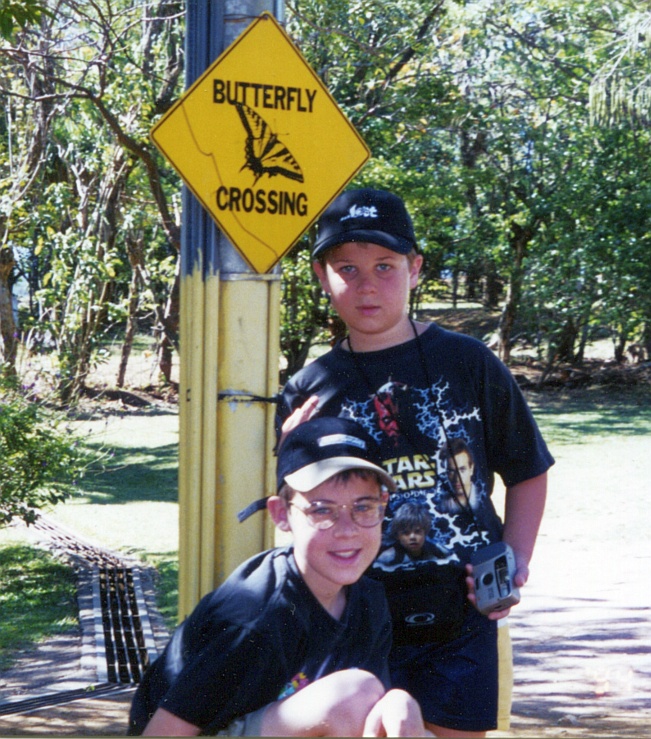
  • Amazing butterflies seemed to be everywhere

    Amazing butterflies seemed to be everywhere

    I wish I had stayed in touch with my friends.

  • I wish that I had let myself be happier.

Referring to the second point, she went on, “They missed their children’s youth and their partner’s companionship.”

During our family’s six month adventure in Costa Rica, we truly experienced each other’s companionship, our children’s youth – and, truth be known – our own.

What do you want to experience?  What will you miss if you don’t?

What our Family learned during our Season in Costa Rica

When we mentioned our half-year visit to Costa Rica with our boys, nine and twelve, people often asked us wouldn’t the kids be missing school.  Well, they may have missed school, but they certainly got an education.  Here are some of the many things we all learned.

People make the journey.  We met many friendly people in Costa Rica.  Two stood out.  One was Jorge and his family, themselves expats from the US and Asia.  We both belonged to the

Traveling under sunny skies in beautiful Costa Rica

Traveling under sunny skies in beautiful Costa Rica

same international organization, and a query to the president in San Francisco had put us in touch.  Jorge immediately invited us to crash at their place while we got our bearings.  All they asked was for us to deliver the airbed they were going to offer us, and the wine for a toast.  Their girls and our boys hit it off as well, so it was a great start to our adventure.

Our second find was Alex Martinez who ran a small B&B and ecotourism operation in the Caribbean Lowlands.  We met Alex through another B&B & tour operator that we found on the Internet.  Alex was a wonderful guide and host, and the boys loved him.  To top it off, he shared a first name with our younger son.  Costa Rican custom allowed them to call each other “El Tocayo” or “Toca” for short.  We all called Alex “Toca” although only Al was the namesake.  We ultimately took a couple of two week trips with Alex, covering much of the Southwest and Interior of the country, and staying in small-scale accommodations run by agricultural coops and other local operators.

The boys eventually got photos of all four species

The boys eventually got photos of all four species

Do one good thing every day.  We learned this lesson in “slow travel” while staying for a month in a dilapidated country house on a forty-acre farm near the village of La Garita de Alajuela.  We shared it with a single-mom from back home and her two kids, friends of ours.  Plus one pair of emaciated dogs, a flock of scrawny chickens, and more insects than we ever knew existed.  There was one bus a day if we wanted to go anywhere.  Sometimes we didn’t.  We could lie under a mango tree beside the small pool out back, and watch the neighbours harvest sugar cane with bull-drawn carts.  Or chat with the woman who ran a tiny chicken shack down the road about how she was helping her daughters through college in the US.  When we took the bus and went on day trips, we were tempted at first to schedule a full day:  “In the morning, we’ll go to the snake farm, in the afternoon to the ox-cart display.”  This always had us rushing to make the second appointment, and kept us from following our hearts with whatever came up in the morning.  So, we resolved only to do one thing a day.  It was one of our most important lessons in Costa Rica.  Even now, when life feels rushed, we remind ourselves of this one.

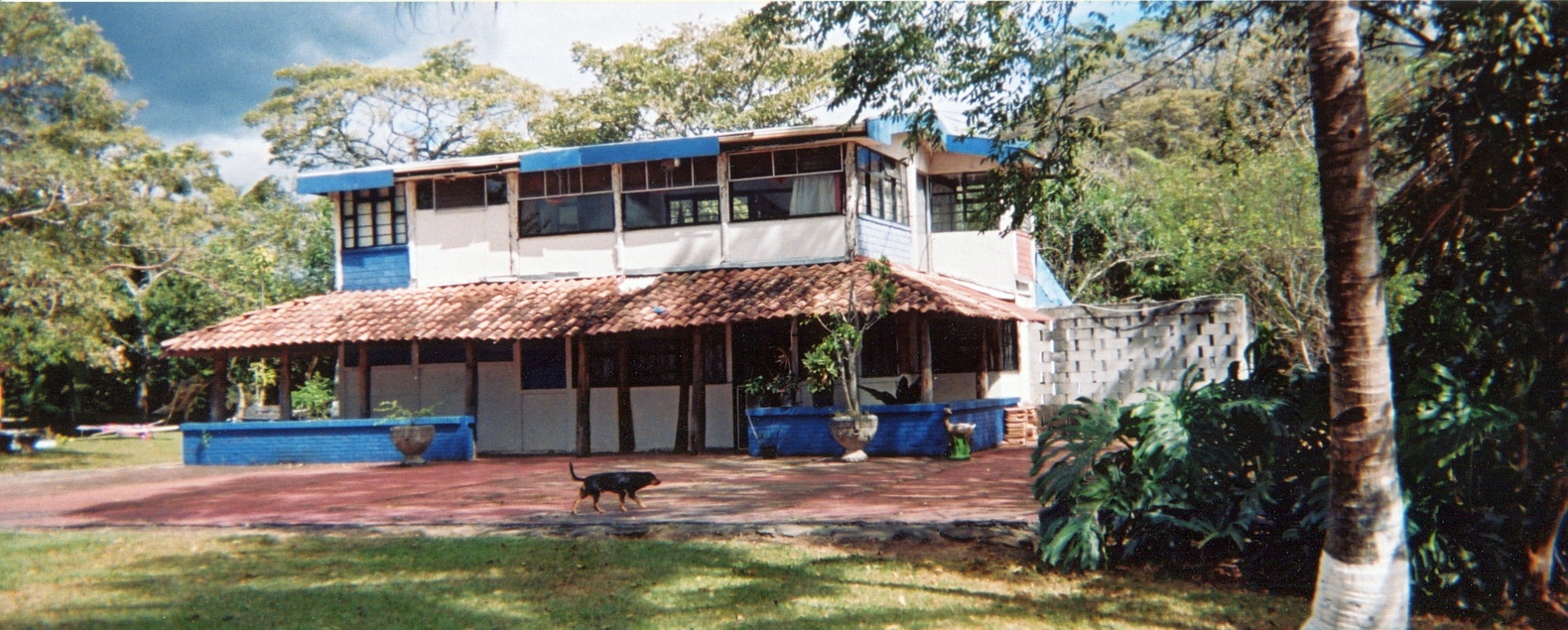
This was our insect-friendly home for a month in the country - and many memories

This was our insect-friendly home for a month in the country – and many memories

Don’t ignore the bugs.  About two-thirds of Costa Rica’s half million species are insects.  We were sure that ants comprised one quarter of all animal biomass in the country.  Apart from the more mundane activities – marveling at unusual beetles, walking sticks, and the ants swarming on the kitchen counters or carrying leaves along an ant highway – we had some more exciting adventures.  An ant bit Dennis while we were trekking through the rainforest to swim in a jungle

Dennis contemplating the bite of the Bullet Ant

Dennis contemplating the bite of the Bullet Ant

pool.  Fortunately, it wasn’t the fabled Bullet Ant.  Our most notable insect adventure had us chased through the mangroves by a swarm of Africanized honeybees – otherwise known as killer bees.  How many kids can say that?  Both boys were stung a few times, but managed to outrun the rest of the swarm.

There’s a naturalist in every child.  “Toca” was an avid birder and bird watching guide.  He was engaged in conservation efforts for the Great Green Macaw.  Before long, he had our nine-year-old hooked; Al spent six weeks of pocket money to buy the definitive Costa Rican bird guide, and logged more than 150 species over the next six weeks.  Al was waking me up before 6AM to look for the Oropendula in the grounds of the pre-Columbian ruins at the Guayabo National Monument.  On our flight home, he struck up a conversation with a professional bird guide returning from Belize – it was amazing to hear them comparing notes about their recent field experiences.

We are lucky and we have so much.  Our friend Alex took us to visit a poor family near his place.  Like many of the poorest in Costa Rica, they were refugees from the recent proxy war in neighbouring Nicaragua.  The father had recently passed away, and the oldest boy of thirteen had to leave school to help his mother support her five children by carving wooden key-chain fobs.  It was eye opening to our boys to see how this family lived in a shack with earthen floors.

Simple accommodation provided by an Agouti Coop

Simple accommodation provided by an Agouti Coop

Closer to home was the single mom and her kids who lived in a small house on the farm we inhabited for a month.  The landlord employed her to keep an eye on the place and do cleaning, and she would do laundry for us at a very low price.  When we first moved into the house, the absentee property owner had asked her to tie up the dogs at night.  Big mistake.  That very first night, while she was at a nearby New Year’s Eve party, someone broke into her place and stole her TV.  This was a very big loss to her.  After that, we encouraged her to let the dogs run free.  As mean as they sounded and looked, within a few days, they had befriended the children and were gentle as puppies.

Treasure your family.  Despite the many adventures we had in Costa Rica, some of our best

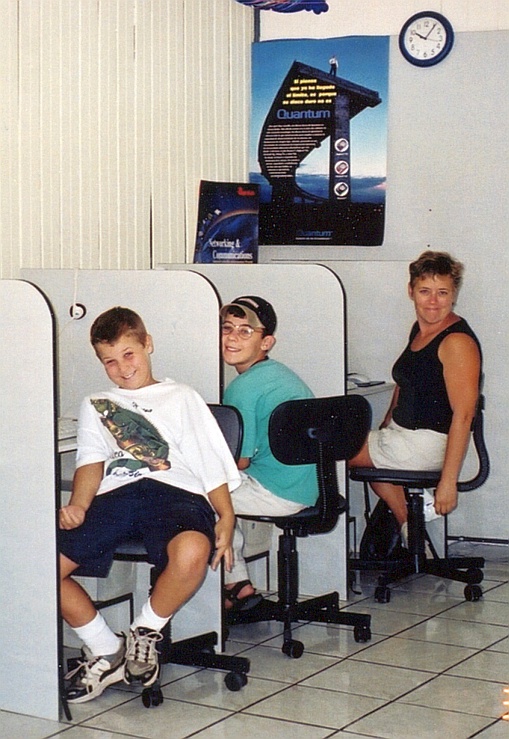
Our weekly trip to the Internet cafe - now disappearing

Our weekly trip to the Internet cafe – now disappearing

memories just came from hanging out together.  After years of always working family time around work commitments and school schedules, it was wonderful just to be able to kick around together, even when there was no agenda.  Wandering around the neighbourhood.  Playing cards at night under a dim fluorescent bulb.  Or talking about what we’d just seen or what we wanted to do next.

We also stayed for a month with a large family in the capital, San José.  A small newspaper ad from a homemaker offered rooms plus meals to students in the area near the University.  We applied for a month, and ended up with two rooms, two meals a day, and all laundry for about $700 for the month.  The matriarch of the household was nearing 80, but she still cooked for a family that appeared to number about 50 people in total.  There were smaller buildings out back where two of her daughters lived with their families.  They would often come in for meals.  One of her sons drove a city bus, which he’d stop outside the house so he could come in for mid-morning coffee.  It was a lively place.  If we lingered at the table after breakfast, we would be treated to a stream of visitors and constant conversation.  Our Spanish improved immeasurably.

View into the crater of Poás Volcano

View into the crater of Poás Volcano

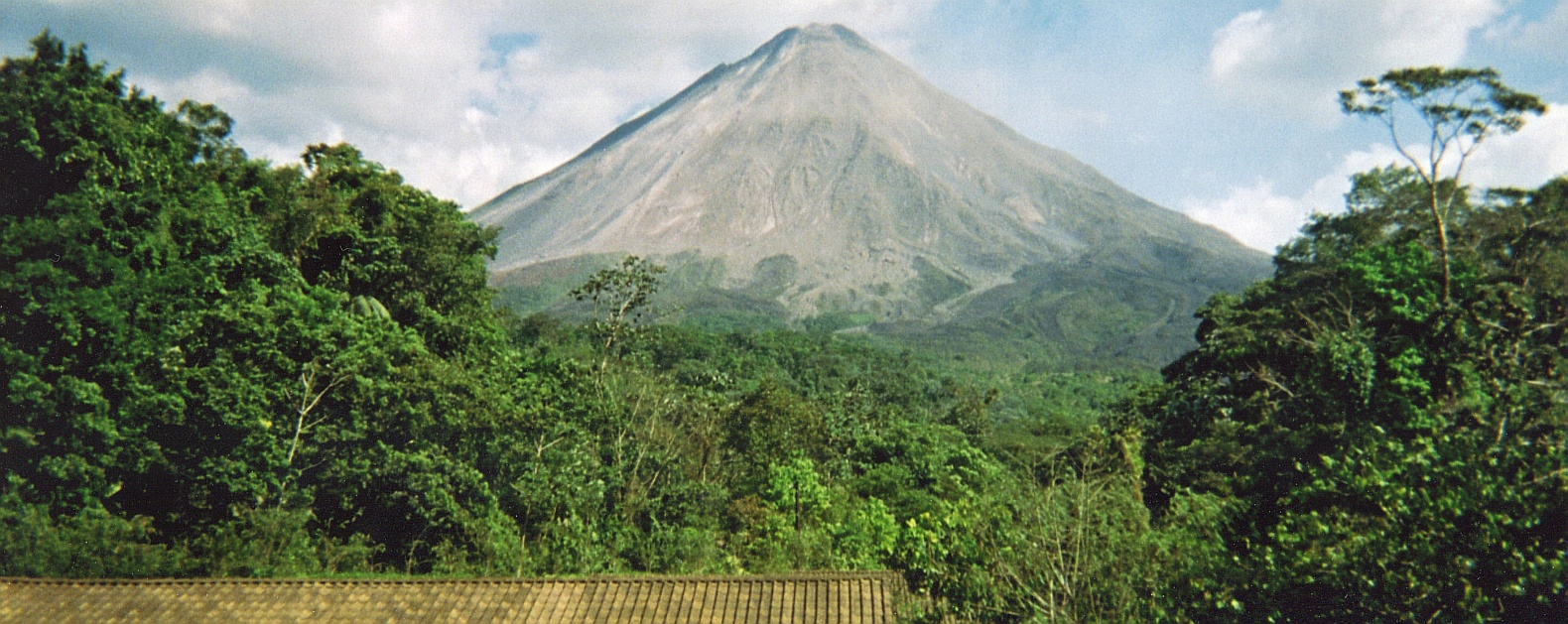
Volcanoes are amazing.  We visited the top of Irazú once, and Poás twice, both still steaming.  We passed Turialba more than once.  The best by far was Arenal, one of the most active volcanoes in the world.  We were fortunate to visit at the tail end of a period of higher activity, with remarkably few clouds – it was amazing to watch the smoke puff from the top, followed by booms like muffled canons.  Most memorable of all was the evening we spent on a recent lava flow on the flank of the volcano.  Not only could we see the orange-hot rock sliding down from the peak, we could actually hear it.  Grandma was with us that evening, and despite her nervousness, stood her ground.

We never seemed to have the camera when Arenal was blowing its top

We never seemed to have the camera when Arenal was blowing its top

In half a year, a family can have a lot of adventures.  We took a fisherman’s open boat through the mangroves and the surf to a deserted bay.  We had lunch in the home of an indigenous chief.  We huddled in primitive cabins while the roar of the Howler Monkeys reverberated

Al making friends with the local chickens

Al making friends with the local chickens

through the valleys.  Broke bread with the Israeli consuls.  Adopted a baby turtle.  Saw every museum in the county.  Stalked the elusive Resplendent Quetzal on the Mountain of Death.  Walked across a river into Panama, on a rickety train bridge high above the crocodiles.  Went zip-lining and whitewater rafting.  Just to name a few.

Some of the other lessons we learned in our “summer” in Costa Rica included:

  • The world is getting smaller.
  • Politics suck.
  • Tourists are annoying.
  • Join the local economy.
  • Pay it back, and forward.

The most important lesson our family experienced while slow traveling around Costa Rica?

The world is your school.  Go get your diploma!

We spent three days snorkeling in Bocas del Toro, Panama while renewing our Costa Rican visas

We spent three days snorkeling in Bocas del Toro, Panama while renewing our Costa Rican visas

In our next post, we’ll talk about the legacy of this trip.  What did we take away from it – the good and the bad – and was it worth it?  (See Part 3 here.)

The herpetologist assured us it wasn't poisonous

The herpetologist assured us it wasn’t poisonous

What do you think?

While what we learned about Costa Rica more than a dozen years ago likely won’t help you, here are a few starting points for your own exploration:

Take your Kids on the Trip of a Lifetime

When our two boys were in elementary school, like many parents we knew, we had a dream of taking them on an extended trip overseas, the Trip of a Lifetime “one day”.  If this sounds like you, we hope Paul’s account of how we created our own family adventure inspires you to realize your dream.  Time is fleeting.  Make it happen!

The conversations at our place started about the time our younger boy hit grade one.  With the oldest only eight, we still had a few years to plan this, we thought.  Yet the years go by quickly, in a whirl of school calendars, baby-sitters, holidays, childhood crises, friends who need attention, and the demands of busy careers.  We had also taken on an ambitious project to create a small low-cost cabin on an island – a task that took four years to complete.  It would have been so easy to sail right through our parenting years without ever getting away on our dream trip.

The view from Paul's favourite spot on the windjammer (it wasn't the tiller)

The view from Paul’s favourite spot on the windjammer (it wasn’t the tiller)

Happily for our dreams, we had built a small network of friends and acquaintances who encouraged us in our ravings and fantasies.  We kept on dreaming, and talking about our hopes.

I had always had a fascination with sailing, and those who went on long voyages driven by the willful wind.  Real and imagined accounts like “Two Years before the Mast” and “Swiss Family Robinson” had been youthful staples.  Naturally enough, my first idea was to take the family on a yearlong sailing trip.  What could be more romantic and adventurous?  I’d even been sailing a few times, although Cheryl’s exposure was limited to a couple of Windjammer cruises in the Caribbean.

If, in those days, we’d had WikiHow, I might have been taken in by their two-page FAQ “How to Sail Around the World”.  A reality check convinced me that the full-time sailing life was not for us.  My skipper friends suggested that the business of sailing might not match my romantic notions.  One of them reminded me that Cheryl had already had a nodding acquaintance with “mal de mer” on the placid seas around the island of Sint Eustatius.

Did sailing in light airs off Sint Maarten give Paul a false sense of security about a round-the-world trip?

Did sailing in light airs off Sint Maarten give Paul a false sense of security about a round-the-world trip?

I discovered that the teenager who mowed our lawn had actually been on such a trip, sailing around the world over a two-year period with his family.  He and his mother even wrote a book.  Reading their account of Mom & Dad manhandling the tiller through hurricane conditions – with the two kids lashed to the mast and doped up with Gravol – had me see the dream could well become a nightmare.

Not wanting to give up on the round-the-world part, we edited the foundering sailboat out of the dream and started looking at commercial airfares.  While good packages existed for traveling around the world, we were still looking at a substantial outlay.  Meanwhile, the pencil ticks on the boys’ doorframes crept relentlessly higher, and their scheduled homework grew longer term-by-term.  We imagined a shrinking window of opportunity before our older boy hit his teens, and school and peer pressures derailed our plans.

We made our first real step when we sold our house to follow our kids’ schooling opportunities – the second such sale in five years.  Thinking we should “stay loose” if we were serious about traveling in the next few years, we returned to renting.  Paying off the mortgage and seeing money in the bank gave a big boost to our plans.

Island life around the cabin kept us busy for a few years

Island life around the cabin kept us busy for a few years

Our plans also continued to evolve.  We replaced the idea of spending most of our travel budget on airfare, and much of our travel time in airports, with a plan for extended “slow travel” in just one country.  Why not really get to know a place?  All we had to do was pick a country, … and set a date.  Ah, the dreaded commitment, that moment of stepping onto the roller coaster!  We hesitated.  The boys turned eight and eleven.

That year, we had our second break when a friend told us she wanted to do something similar.  Her kids and ours were playmates so doing something together might work out.  Our friend also inspired us to take the plunge.  If a single mother on a lower budget could do this, then what excuse did we have?  “What do you think about Costa Rica?” she asked.

Costa Rica appealed to us.  It was different enough yet not too scary: one of few Latin American countries that had never had a violent overthrow of government.  It had a good medical system, so we weren’t too concerned about the kids getting sick without help, or a bite from the deadly Fer de Lance far from anti-venom.  (Parents worry about such things)  Even in 2000, mosquito-borne diseases were limited to a few sections of the country, and we learned you could drink water straight from the tap almost everywhere.  Compared to my travel in Brazil in the 70s, this seemed quite manageable with kids.  I could get by in Spanish, so we could escape from English yet not be all at sea.  Best of all, we loved the focus on eco-tourism and outdoor adventures.  Oh, did I mention it was warm and sunny during our winter?

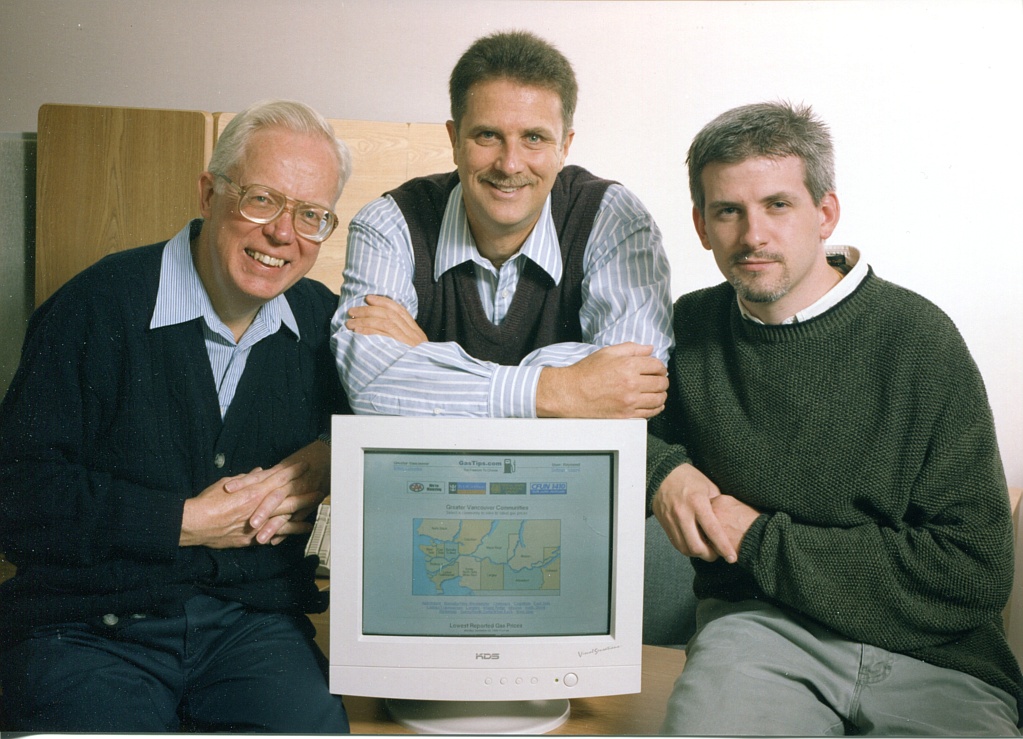
Paul and his two partners about a year before we left

Paul and his two partners about a year before we left

Cheryl and I held our breath, and made the commitment to go during the following school year, a little less than a year distant.  We began announcing our intentions and making arrangements.  Over the following six months:

  • We negotiated open-ended unpaid leaves for both Cheryl and me.  At that time, we both worked in a company in which I had a part-interest.  We had been talking about doing this for three years, so, it was relatively easy.  In hindsight, it turned out to be harder than we imagined, but that’s a story for later.
  • We gave notice on our lease.  Rather than keep our home – and a place to fret about – we chose to put everything we owned into a couple of portable storage containers.  Moving all the furniture and belongings from a typical four-bedroom house into some containers in the driveway sounds like a lot of work – but in the excitement of the impending trip, it didn’t seem so bad.  We arranged to spend the last few weeks before our trip at my parents’ place.
  • We formally registered our boys for homeschooling that school year, which would be grades four and seven for them.  In prior years, we had been part of a parent-managed Montessori school, and we chose it as our formal school partner for this registration.  The teachers offered us a few helpful suggestions, mostly around not worrying about it too much, with perhaps a bit of work on mathematics and Spalding Rules for spelling.
  • We all signed up for some elementary Spanish classes – not that the boys paid much attention.
  • We arranged to handle the finances that we couldn’t put on hold.  This primarily consisted of a good conversation with our bank manager, and enrolling my Dad to fill in any gaps.
  • We visited the local travel clinic and had all our recommended shots … and then some.
Our first discovery in CR was a local Montessori school

Our first discovery in CR was a local Montessori school

The Internet was just coming into its own as a place of travel research, so research we did.  We also canvassed our contacts for helpful ideas:  best flights, where to go in Costa Rica, what to see, what to do, best time to visit, and where to start?  By the time we said good-bye to my parents and boarded the plane for San Jose, we were about as ready as we could be.  In a future post, I’ll talk more about the planning for the trip, and the trip itself.  The unanimous vote:  it was the best six months of all our family years!

See Part 2 here.

What’s your travel dream for your family?  What are you doing to make it a reality?

Paul’s Left Brain Takes a Mayan Holiday

Paul has been reflecting on what he likes so much about travel – about being in “vacation mode”.  He’s not one to sit around the pool with a margarita, but can usually be found on an all-day walking tour, or working on a new foreign language.  He observed that his favourite principles of good vacations apply just as well to “everyday life at home” – although we don’t always remember them:

Paul's not above trying the local beer, however.

Paul’s not above trying the local beer, however.

Here’s something he wrote on the subject a couple years back…

Ah, to live life in vacation mode every day!  What does it take?

I explored the texture of that question on a recent trip to Mexico’s Yucatan Peninsula.

For sun-chair reading, I’d packed a copy of Jill Bolte Taylor’s My Stroke of Insight.  Neuroscientist Dr. Jill reports “from the inside” what it felt like when a massive stroke shut down the left side of her brain, and put the right side in charge.  As I understand it, the left brain manages linear reasoning and language functions;  the right brain fills a more intuitive, holistic role.  In Dr. Jill’s case, for the first eight months of her eight-year recovery, the “little voice” in her head fell silent.  Imagine!  She used her experience to reflect upon her life in general, and in particular, the relationship between her two different aspects.

Dr. Jill observed that “vacation mode” derives from the right brain.  So simple, I mused?  The question hovered over me like an iridescent Yucatan hummingbird.  Meanwhile, I did the usual holiday things.

Even plain, the best tortillas ever!

Even plain, the best tortillas ever!

One of my travel activities has me strike up conversations with strangers for no reason.  I dusted off my knowledge of Spanish, German and Portuguese to talk to almost anyone I found myself next to, even tried to learn a little Mayan.  Bix a bel, tz’unu’un!  What’s up, Little Hummingbird?  Yet my wife and I both found it hard to start conversations at the resort.  Our fellow vacationers seemed reluctant to connect, as if locked in their tour buses with the windows up.  I felt frustrated.  After this mood settled over me, something startling took place.

En route to climb the great Mayan pyramid at Cobá, we pulled of the road at a corner store in one of the small towns that crouch in the Yucatan interior.  We squeezed in to harvest a few nuts and chicharrones to stave of the need for a tourist-priced lunch.

I plopped a couple of bags of munchies near the cash register, while we continued to hunt for more.  Just then, a small Mayan girl of six or seven came in, chose a bag of the pork-rind snacks and took them to the cashier.  As we arrived at the counter with the rest of our purchases, I saw the store owner already totaling our bill.  The young girl stood waiting.  I sensed him directing preferential treatment toward us “gringo elders”

En route to Cobá, the better known Chichén Itzá

En route to Cobá, the better known Chichén Itzá

In my most sophisticated Spanish, I explained that she had preceded us, and that he should look after her first.  Alas, my linguistic abilities failed me.  After a couple of failed attempts followed by puzzled looks, he asked me if I meant to pay for the young girl’s purchase.  Annoyed that my communication attempt had gone so completely wrong, I shook my head and replied, “No, no!  That’s not what I was trying to say.”  Chastened into silence, I let him continue with our order, and we left the store.

While we poked around decaying ruins that afternoon, however, I had my own “micro stroke of insight.”  I saw that I had at least two valid answers to the store owner’s question, “Do you want to pay for hers too?”

My “right-wrong” linear left brain had jumped in and taken control of the situation in the store.  “No, that’s wrong.  That’s not what I was trying to say.”  End of story.

Yet his question had another valid answer, one that my less linguistically adept right brain could only whisper on a quiet trail in a Mayan jungle.  Did I want to spend sixty cents to buy chips for a cute kid who looked as if sixty cents mattered?  Did I crave a chance to make the tiniest human connection, no matter how fleeting?  Yes. I did!  Yes, I had!  Yes, I would have!  And then a wave of sadness and disappointment flooded my soul concerning opportunity missed – not just this one, but for all the little missed opportunities of a lifetime.

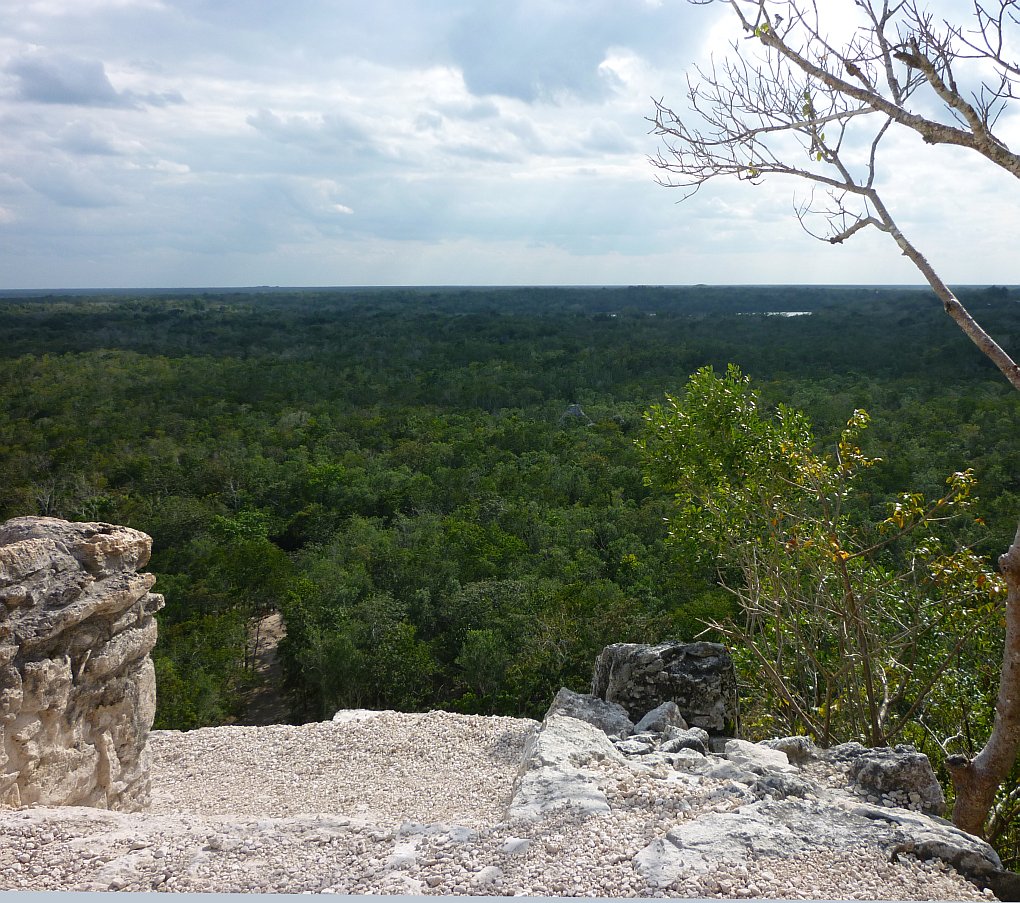
Jungle-clad Cobá from the top of its pyramid

Jungle-clad Cobá from the top of its pyramid

Fresh from Dr. Jill’s book, I supplied mental hemispheric interpretation to the event.  My number one priority on this holiday involved connecting to people, just because – I thought that a right-brain function.  Yet I’d let my linear left brain run the whole show with its need to get the Spanish right.

This reflection troubled me.  My troubling in turn shocked me.  My own stroke of insight had allowed me to glimpse how my left brain’s reaction had drowned out my right brain’s voice, leaving my life just a little less rich.  A single thread dropped from an intricate Mayan blanket.  Even after returning from Mexico, I kept brooding.  Intrigued that such a trivial event had bothered me for days, I pulled at the loose thread.

How often had I missed an opportunity like this one because I didn’t want to get something wrong?  Ba’ax ka wa’alik?  Hell-o?  Now I see how many threads I’ve dropped in the tapestry of my life. It’s a good blanket regardless and it keeps me warm, but my stroke of insight showed me that I could weave it even warmer, more colourful.  Sometimes I hush my left brain’s chatter, listening for a second right answer, a fleeting chance to make the human connection, just because.

Is Paul destined for the Sacred Cenote (also known as the "Well of Sacrifice") at Chichén Itzá

Is Paul destined for the Sacred Cenote (also known as the “Well of Sacrifice”) at Chichén Itzá

I’ve watched myself drop a few more stitches since then.  Sometimes I’ve gone back and picked them up again.  I look forward to catching more before the tapestry runs out.  The colours brighten.

Yum bo’otik!  Thank you, Mayan sun god.

For further exploration:

Speaking of vacation mode, here's another lounge lizard from around the pool

Speaking of vacation mode, here’s another lounge lizard from around the pool

What’s “vacation mode” mean for you?

Avoiding Travel Scams without Avoiding Travel

In last week’s post, Paul tells the story of losing $75 to a scam in the Dominican Republic.  This week, he draws some lessons from the experience.

Many travelers express concern about getting ripped off while traveling.  Unfortunately, for many in our age group, this fear keeps them from traveling … or from being as adventurous as they might be.

While it’s important to recognize the risks while traveling, it’s easy to scare oneself.  In over four decades of travel, we’ve suffered perhaps half a dozen losses, and a few more attempts.  What little we have lost was a small price to pay for the stories we acquired in return.  Almost surely have we missed a greater number of positive experiences due to over-caution.  We continue to seek the middle ground between being open to everything, and being “open season” for crooks abroad.

Everyone's selling something.  Are you buying?

Everyone’s selling something. Are you buying?

To put our $75 loss in perspective, it was the price of a tour.  To a minimum wage worker in the DR, it was a week’s wages.  Still, it seems unfair to the Dominicanos who stick to less lucrative but legal work.  Moreover, no one likes to feel he’s been taken, including Paul.

A little caution goes a long way towards avoiding a rip-off.  Knowledge of common cons can be helpful as long as it doesn’t frighten more than enlighten.  Check out WikiTravel’s “Common Scams” and Rick Steve’s “Tourist Scams & Ripoffs”.  Maybe you can spot the one that hooked Paul.

Understanding the psychology behind a successful scam may also help you recognize one more easily when you’re the intended victim.  This article from FraudAid lays out some of the basics.  Paul uses it to deconstruct his own experience with the one that got him – and the earlier scam, as he was struck by the common patterns in two very different cons forty years apart.

Enjoy the market in Barcelona but watch the crowds

Enjoy the market in Barcelona but watch the crowds

We think Paul takes secret delight in his vicarious connection with some of the great scams of Hollywood – like “The Sting” or David Mamet’s quirky “The Spanish Prisoner” – even if he was cast in the role of the Mark.  This dictionary of Scoundrel’s Slang may be helpful in understanding his analysis of the events described in last week’s post.  (You may want to reread the story first.)  At each step, Paul the Mark identifies what he might have done differently.  Here’s the rest of the Grifter cast:

  • The Outside Man, or Roper:  the young “father” with the sick baby
  • The Inside Man:  the shopkeeper whose shop was closed
  • On the Wall:  the young boy, on the lookout for the Bluecoats and other interference

As described by FraudAid, the first step is for the Roper to identify the Mark.  Since Paul was a Camera Hugger and traveling solo, he was an obvious choice; had Cheryl been with him, he likely wouldn’t have been a target for that con, although there are other cons designed for couples.  The Roper now has to determine the Mark‘s personality profile and identify what motivates him.

Crowds outside (and inside) Versailles are a pickpocket's delight.  But that's no excuse to miss out.

Crowds outside (and inside) Versailles are a pickpocket’s delight. But that’s no excuse to miss out.

In this case, Paul’s desire to converse in Spanish came through early on.  This put him at a disadvantage; had the con been going down in English, Paul’s “spidey sense” might have triggered earlier.  Operating in a second language can make it harder to pick up subconscious cues.  The Roper also counted on the Mark‘s desire not to look like a “rich tourist” by admitting he couldn’t have recognized any of the security guards from the hotel if he met them on the street.  Had the Mark asked, “Which hotel was that?”, it could have thrown off the con, although a skilled Roper could have recovered.  Before long, the Roper had determined that the Mark‘s wish to help a young family was the psychological persuasion that he needed.

What Paul could have done differently:  taken over guiding the script.  Assuming he hadn’t dismissed the request out of hand, he could simply have asked how much the young father needed and lent or given it to him right there.  Possible savings: $70.

During the second step of the con, the Roper‘s job was to make the Mark dependent upon him in some way.  One way he did this was to throw the Mark off balance.  He did this by quickening his pace to the point where the Mark had part of his attention just on keeping up.  Getting the Mark into unfamiliar territory was also designed to increase his sense of being linked to the Roper.  At the same time, the Roper continued unrelated conversation designed to mitigate any unease the Mark might feel about what was happening.

What Paul could have done differently:  trusted his unease at walking so quickly.  When he noticed that he was feeling rushed, he could have stopped, re-asserted his own agenda, and walked away if there had been any resistance.  It might have been a good time to switch to English.

The final step of the con was the Sting.  Once the Roper arrived at the closed shop with the Mark in tow, events moved swiftly.  Within a minute, Paul found himself staring at the Inside Man‘s $60 receipt with his mouth hanging open … considering his dwindling options.  Chances are the Grifters would not have resorted to violence, but they probably counted on the Mark’s discretion overpowering his valour.  They would have known he’d resist losing face, a motive often more powerful than the fear of death.  Who knows what strategies they might have planned to mollify the Mark if he hadn’t chosen to Cop a Heel?

What Paul could have done differently:  done an about face at the decisive moment.  Paul’s intuition was definitely ringing alarm bells as he stepped through the shop door.  It would have been uncomfortable to have chilled at that point and turned back, but it would have been the wiser course.

We avoided pickpockets at the Louvre by going early.  The day before we saw several pickpockets sussing us out nearby.

We avoided pickpockets at the Louvre by going early. The day before we saw several pickpockets sussing us out nearby.

The more general lesson is that our own personal weak points will determine what cons we’ll fall for, and what we need to be vigilant about.  Paul knows that he’s a sucker for a good cause, and is always looking for second-language opportunities when he’s on the road.  He is often less assertive than might be good for him.  His primary personal lessons for avoiding cons:  “Trust your intuition!  Don’t be afraid to assert your own agenda!”

Knowing yourself and knowing the cons can help you feel more comfortable while traveling.  Just don’t let it stop you.  Travel involves risk, as does everything worthwhile in life.  We have friends who lost their entire retirement nest egg to an investment scam from the comfort of their own home.

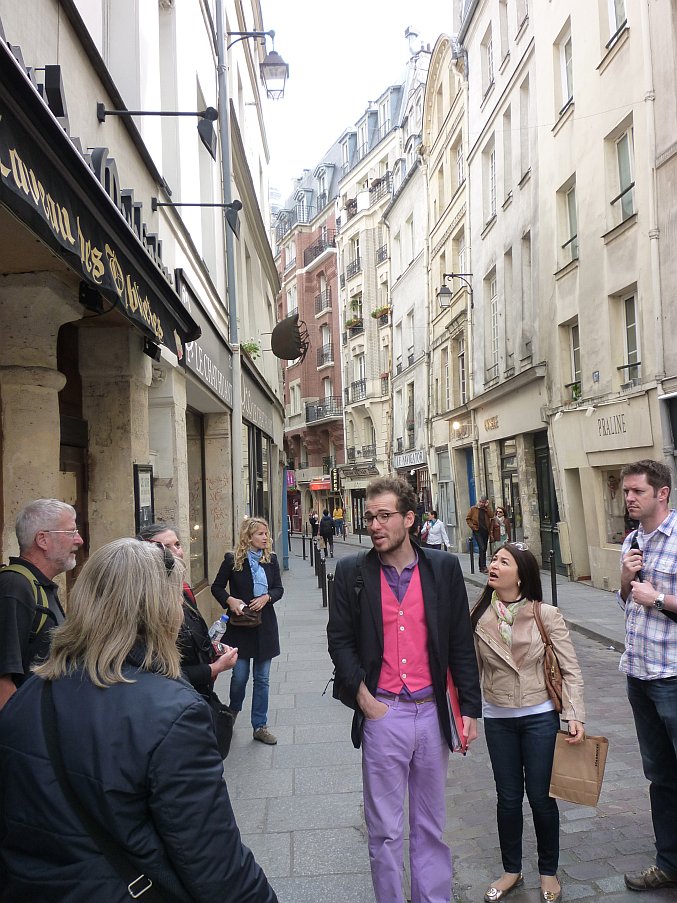
Seeing Paris' Latin Quarter with a "Discover Walks" local can make it safer

Seeing Paris’ Latin Quarter with a “Discover Walks” local can make it safer

“The best revenge is living well.

If you do get conned, it’s best to remember that Spanish proverb.  Resorting to violence as this young woman did could make a bad situation much worse.

For further reading:

What’s your best advice on avoiding trouble on the road?

Best Tour Ever?

Cheryl and I recently spent a couple of weeks on the Caribbean island of Hispaniola.  We had chosen to stay in a former small fishing village, now growing in popularity with European tourists.  With few North American visitors, there was little English spoken, something that appealed to our sense of adventure.

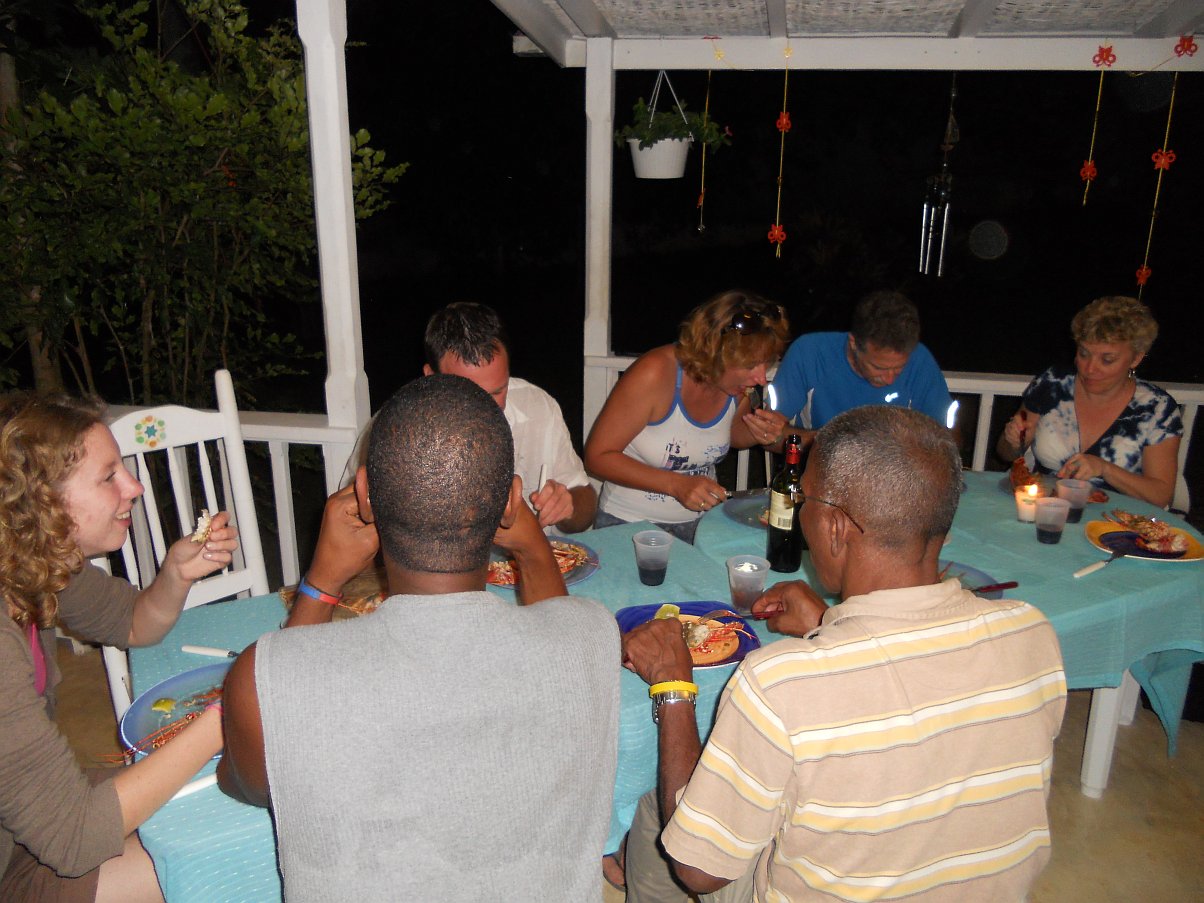
Gourmet seafood with new friends from the dive shop

Gourmet seafood with new friends from the dive shop

Adventures came from unexpected quarters.  An aborted snorkel trip had led to our befriending the French family who ran the dive shop, and we had joined staff at their home for a gourmet seafood meal.  We’d also put our travel technology to the test.  A family health emergency at home had Cheryl trying to manage doctors’ care and hospital transfers remotely, spending hours every day sitting by the pool on her iPod skype-to-phone connection.  Maybe the stress still won out:  she spent most of the second week knocked out by a nasty bug.  After a week of house calls at the small family-run hotel, the patient was old friends with the doctor.

Doctors still make house calls in the DR

Doctors still make house calls in the DR

On the last day of our stay, I insisted Cheryl treat herself to a massage.  The stomach bugs had canceled a couple of tours so we had a cushion in the budget.  Meanwhile, I spent the morning wandering around town with my camera, taking in the sights.  The air was warming, the sun was growing hot, and I was enjoying the rhythm of the place.  Pretty girls said “hi” in passing.  Everyone seemed happy.

A young man joined me with a friendly “Hola” as I was strolling up the street.  How was I enjoying his country?  He mentioned he was one of the security guards at our hotel.  I couldn’t place him – there were a couple of shifts of each day – but I didn’t let on, and we continued to chat.  I was happy for the chance to practice my Spanish, and he seemed willing to humour me.  He asked if I liked fishing, and said he had a cousin who could give me a deal on a fishing trip.  I smiled.  We’d been declining similar offers all week, and fishing wasn’t my thing anyway.

One of the sites around town that caught my eye

One of the sites around town that caught my eye

He talked a bit about his family, and told me he was worried about his baby son.  A doctor had just told his wife that the baby wasn’t getting enough nourishment, and that she needed to start supplementing with formula right away.  He wanted to get some today, but he didn’t have the cash.  He asked if I’d be able to lend him the money and he could pay me back at the hotel that evening when he got paid.  I thought to myself that I’d likely not see the money again, and immediately felt guilty.  I reasoned that I wouldn’t mind contributing a few dollars to a struggling family.  Our short stay in their town had shown us that many here got by on very little.  I told him I could help him out.

He thanked me and suggested the easiest thing to do would be to buy the formula together, and I could pay the store directly.  He knew a store up the street a bit where the prices were lower, but he was concerned they were about to close for siesta.  He quickened his pace considerably explaining that he knew the shopkeeper and it really would be the best place to go.  As I tagged after him, we continued to talk about some of the things we’d done in the past couple of weeks.  Struggling with more complex Spanish, I told him of our own medical challenges.  A couple of times, I suggested we could stop at another store, but my new friend appeared to dislike the thought.

Out for a stroll on Main Street - what will you see?

Out for a stroll on Main Street – what will you see?

By then we’d left the part of town frequented by tourists.  I suspected that a local on a security guard’s salary would find better deals in the less upscale neighbourhood.  Just as I was about to ask how much farther, we arrived at a small grocery store – with the metal shutters down.  My companion let out an exclamation, then asked a boy sitting out front something I didn’t quite catch.  “Good news!” the distraught father said, “My friend is still inside.”  He knocked on the side door, and it opened to admit us into the dimly lit interior of the closed store.  The shopkeeper behind the counter said hello, and the two men exchanged a few words.  The young security guard asked for the formula and the shopkeeper went to the shelves and brought back a box that looked like it would last until the baby was weaned.  I felt an unpleasant taste in my throat.  While I was still recovering my equilibrium, a case of disposable diapers appeared on the counter beside the box of formula.  At my urging, the bill was quickly calculated, and the shopkeeper held out his hand for the equivalent of about sixty dollars.

At that moment, the growing unease I’d been refusing to acknowledge for the last twenty minutes asserted itself.  I saw I’d put myself into a potentially dangerous situation.  Here I was in a part of town where tourists didn’t go.  I was inside a shuttered store, with two young men, both of whom now looked surprisingly burly.  The young boy outside was probably a lookout.  The young “father” had suddenly grown shrill and demanding – I had promised to pay for the milk, after all.  I was definitely past my physical prime, and with no fighting skills to speak of.

The candidate's message: a much bigger scam?

The candidate’s message: a much bigger scam?

My priorities changed rapidly.  My overriding objective was to get back out on the street.  Giving up sixty dollars to ensure my escape seemed a small price to pay.  I didn’t even blink when the young man grabbed the extra bills from my hand as I was paying the shopkeeper.  Pushing open the door, I burst out into the bright sunlight, stepped over the boy, and high-tailed it back down the street even faster than we’d come up it.  As the shuttered shop fell behind me, I counted my losses, about $75 all told.  I imagined the milk and diapers going back on the shelves.  I wondered how many times they’d been “sold”.

The next day, as Cheryl and I were taxied out of town, we passed the store, now open.  I briefly considered stopping and raising a scene, but figured nothing worthwhile would come of it.  Besides, they’d played a good game and won.  We continued on to the airport without interruption.  Losing the money had been one thing.  The blow to my pride and self-confidence had been much worse.  How had I let myself be taken in?  “I don’t know what you were thinking!” said Cheryl.

We visited this park on one of the legal tours

We visited this park on one of the legal tours

With a bit of perspective, the money ceased to bother me.  In fact, I came to think of this experience as just one more “tour,” an educational one this time.  The price of $75 was the norm for the higher-end tours in town.  I had to admit that this was the most memorable tour I’d had in the two weeks!

Talking to strangers, meeting people when we’re on the road, these are some of greatest pleasures of travel for us.  I’ve always tended to trust people’s motives until proven otherwise – and I don’t really want to change.  Cheryl doesn’t want me to change either, but she does wish I’d be a little less willing to suspend disbelief.  Frankly, I wanted to make sure I wouldn’t fall for a scam like this quite so easily next time, so I spent some time thinking about how I fell for this one, and how I might train myself to heed the warning signs sooner next time.  I’ll share some of that next time, as well as some security tips from travel gurus.

I trust no one reading this will restrict their travels as a result of my story.  In over forty years, Cheryl and I have traveled a fair amount – and I’ve been in a few dicey locations – but all told, we’ve had very few problems between us.  A couple of pickpocket attempts, one successful one during the Munich Olympics.  I’m sure we’ve paid more than we should have for the odd purchase abroad.  In Costa Rica, I lost my electric razor to a “fisherman” – I’ve traveled with blades ever since.

Many years ago, while serving tables in a small town in Germany, I lost a hundred Deutschmarks to a winsome young German lass – almost $150 in today’s money.  I learned from the “polizei” that many other young lads in town had been fleeced during her short stay.  She knew her marks!

This lovely old hotel was the site of Paul's first "tour" - still looks lovely as ever.  I wonder if Brigitte still visits?

This lovely old hotel was the site of Paul’s first “tour” – still looks lovely as ever. I wonder if Brigitte still visits?

What about you?  Have you ever fallen prey to scams or other petty crime while traveling?